
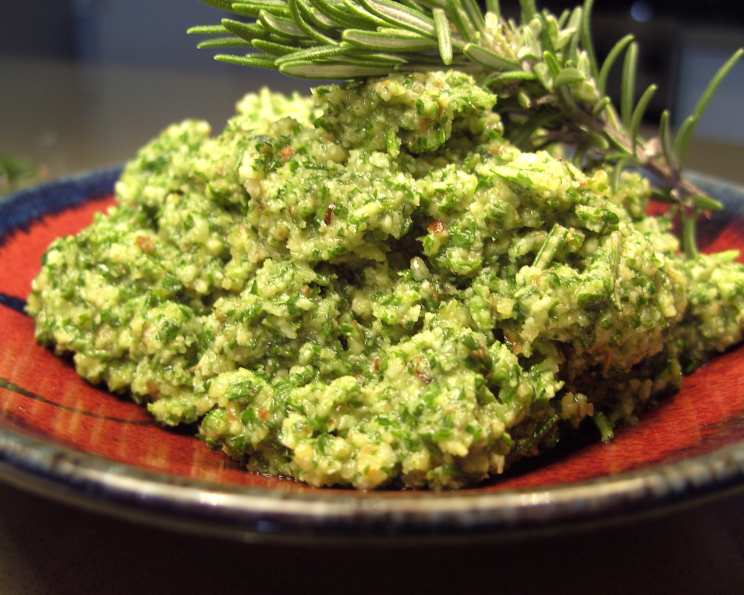
Rosemary Pesto: An Aromatic Embrace of Mediterranean Sunshine
The first time I encountered rosemary pesto, it was a revelation. I was on a rustic Italian cooking holiday, the kind where the scent of sun-baked herbs hangs heavy in the air. Our host, a woman whose hands moved with the grace of a seasoned artist, brought out a vibrant green concoction that smelled as invigorating as a walk through a Tuscan pine forest. It wasn’t the familiar basil pesto; this was bolder, sharper, with a piney perfume that spoke of wild herbs and ancient groves. That fragrant paste, dolloped generously onto grilled artichoke hearts, was an instant memory etched into my palate, a flavor that still transports me back to that sun-drenched afternoon.
Recipe Overview
- Prep Time: 20 minutes
- Cook Time: 0 minutes
- Total Time: 20 minutes
- Servings: 6 (as a condiment)
- Yield: 1 ½ cups
- Dietary Type: Vegetarian, Gluten-Free, can be Dairy-Free
Ingredients
This rosemary pesto is a testament to the power of simple, high-quality ingredients. The star, of course, is fresh rosemary, its potent fragrance forming the backbone of this robust sauce.
- ⅓ cup fresh rosemary, stripped from the stalk
- 1 ½ cups fresh parsley, rough chopped
- 2 garlic cloves, peeled
- ½ cup freshly grated Parmesan cheese (omit for dairy-free)
- ½ cup walnuts (or your favorite nut variety like pine nuts or almonds)
- ½ cup good quality olive oil
- Salt and freshly ground black pepper, to taste
Ingredient Notes:
- Fresh Herbs: Ensure your herbs are thoroughly washed and patted dry. Moisture can dilute the flavor and affect the texture of your pesto.
- Rosemary: While you can use dried rosemary in a pinch, the flavor of fresh is unparalleled for this recipe. Make sure to strip the leaves from the woody stalks; they can be tough and bitter.
- Nuts: Walnuts offer a slightly earthy and robust flavor that pairs beautifully with rosemary. Pine nuts are the classic choice for pesto, lending a delicate sweetness. Almonds are another excellent option. Toasting them lightly before adding can enhance their flavor even further.
- Parmesan Cheese: For an authentic taste, use freshly grated Parmesan cheese. Pre-grated varieties often contain anti-caking agents that can affect the texture and flavor. If you’re making this dairy-free, simply omit the cheese; the pesto will still be wonderfully flavorful.
Equipment Needed
For this straightforward recipe, you won’t need much specialized equipment.
- Food processor or a blender
- Measuring cups and spoons
- Sharp knife and cutting board (for rough chopping parsley)
Instructions
Crafting this aromatic pesto is wonderfully simple, requiring just a few minutes and the magic of a food processor.
- Prepare the Herbs: Begin by thoroughly washing your fresh rosemary and parsley. Gently pat them completely dry with paper towels or a clean kitchen towel. This step is crucial to prevent a watery pesto.
- Strip the Rosemary: Carefully strip the rosemary leaves from their woody stalks. Discard the stalks. If your rosemary leaves are particularly large, you can give them a quick chop.
- Combine Ingredients: In the bowl of your food processor, combine the stripped rosemary, the rough-chopped parsley, the peeled garlic cloves, the Parmesan cheese (if using), and the walnuts.
- Process the Mixture: Pulse the ingredients a few times to roughly chop them. Then, with the food processor running, slowly stream in the olive oil through the feed tube until the pesto is well combined and reaches your desired consistency. You’re looking for a vibrant, slightly textured paste, not a smooth purée.
- Season to Taste: Once everything is blended, scrape down the sides of the food processor bowl. Taste the pesto and season generously with salt and freshly ground black pepper. Adjust the seasonings as needed. Remember, pesto flavors can deepen as it sits.
Expert Tips & Tricks
As a chef, I always look for ways to elevate even the simplest dishes. Here are a few tips to make your rosemary pesto truly shine:
- Herb to Oil Ratio: The ½ cup of olive oil is a guideline. If you prefer a looser pesto for drizzling, you can add a tablespoon or two more. For a thicker spread, use slightly less.
- Nut Toasting: For an extra layer of depth, lightly toast your walnuts in a dry skillet over medium heat for 3-5 minutes, stirring frequently, until fragrant. Let them cool completely before adding to the food processor.
- Garlic Power: The intensity of garlic can vary. If you’re sensitive to raw garlic, start with one clove and add the second if you feel it needs more punch. You can also gently roast the garlic cloves before adding them to the pesto for a milder, sweeter flavor.
- Texture Control: For a smoother pesto, process for a longer duration. For a chunkier, more rustic texture, process in shorter bursts, stopping when you achieve your preferred consistency.
- Citrus Zest: A touch of lemon zest (about ½ teaspoon) can add a bright, fresh lift to the rosemary’s bold flavor. Add it along with the herbs.
Serving & Storage Suggestions
This rosemary pesto is incredibly versatile. Its robust flavor makes it a fantastic condiment for a wide array of dishes.
Serving:
- Pasta: Toss with your favorite cooked pasta. A light coating of pasta water helps the pesto cling beautifully.
- Potatoes: Dollop onto roasted or grilled potatoes. It’s especially wonderful with crispy potato wedges or roasted new potatoes.
- Grilled Vegetables: Smother grilled zucchini, eggplant, asparagus, or bell peppers. The pesto’s richness perfectly complements the smoky char of the vegetables.
- Bread: Spread on crostini or use as a sandwich spread.
- Protein: Serve alongside grilled chicken, fish, or lamb for an extra burst of flavor.
Storage:
Proper storage will ensure your rosemary pesto remains fresh and flavorful.
- Refrigeration: Transfer the pesto to an airtight container. To prevent oxidation and browning, pour a thin layer of olive oil over the surface of the pesto before sealing. It will keep in the refrigerator for up to 5 days.
- Freezing: Rosemary pesto freezes beautifully. Portion it into an ice cube tray for convenient single-serving amounts. Once frozen, transfer the cubes to a freezer-safe bag or container. Frozen pesto can be stored for up to 3 months. Thaw in the refrigerator overnight or gently reheat on the stovetop.
Nutritional Information
Here is an estimated nutritional breakdown for the rosemary pesto, based on the provided ingredients and assuming a serving size of approximately ¼ cup (which would provide about 6 servings from the total yield).
| Nutrient | Amount per Serving | % Daily Value |
|---|---|---|
| Calories | 350 kcal | 18% |
| Total Fat | 35 g | 45% |
| Saturated Fat | 5 g | 25% |
| Cholesterol | 5 mg | 2% |
| Sodium | 150 mg | 7% |
| Total Carbohydrate | 5 g | 2% |
| Dietary Fiber | 2 g | 7% |
| Sugars | 1 g | 1% |
| Protein | 4 g | 8% |
Note: Nutritional values are approximate and can vary based on specific ingredient brands and substitutions (e.g., type of nut, inclusion of cheese).
Variations & Substitutions
While this rosemary pesto is fantastic as is, there’s always room for creativity in the kitchen!
- Nut-Free: If you have a nut allergy or simply want a nut-free version, try substituting toasted sunflower seeds or pumpkin seeds for the walnuts. Toasted pepitas also work wonderfully.
- Herb Blends: Feel free to play with the herb ratio. You can add a small amount of basil to the mix for a nod to tradition, or incorporate a touch of mint for an unexpected twist.
- Spicy Kick: For a bit of heat, add a pinch of red pepper flakes to the food processor.
- Creamier Texture: If you desire an even creamier pesto, consider adding a tablespoon of Greek yogurt or a small avocado before processing.
FAQs
Q: Can I make this rosemary pesto without a food processor?
A: Absolutely! You can achieve a similar result by finely mincing all the ingredients by hand and then vigorously whisking them together with the olive oil. It will be more rustic, but equally delicious.
Q: How long does fresh rosemary pesto last?
A: When stored properly in an airtight container with a layer of olive oil on top, it will keep in the refrigerator for up to 5 days.
Q: Is this recipe naturally dairy-free?
A: The base recipe is naturally dairy-free. However, if you include the Parmesan cheese, it will contain dairy. Omit the cheese for a dairy-free option.
Q: What kind of olive oil should I use?
A: A good quality extra virgin olive oil is recommended for its flavor. Avoid using a highly refined olive oil, as it can mute the vibrant taste of the herbs.
Q: My pesto looks a bit dry. What can I do?
A: If your pesto is too dry, simply stream in a little more olive oil, a tablespoon at a time, while the food processor is running, until you reach your desired consistency.
Final Thoughts
This rosemary pesto is more than just a condiment; it’s an aromatic ambassador of the Mediterranean, a vibrant burst of herbal sunshine ready to transform your meals. Its robust flavor profile, with the piney notes of rosemary and the pungent kick of garlic, is a delightful departure from the everyday. I encourage you to experiment with it, to let its fragrance fill your kitchen, and to savor the way it elevates simple dishes into something truly special. Whether you’re tossing it with pasta, spreading it on crusty bread, or gracing grilled vegetables, I have no doubt it will become a cherished addition to your culinary repertoire. Enjoy!