
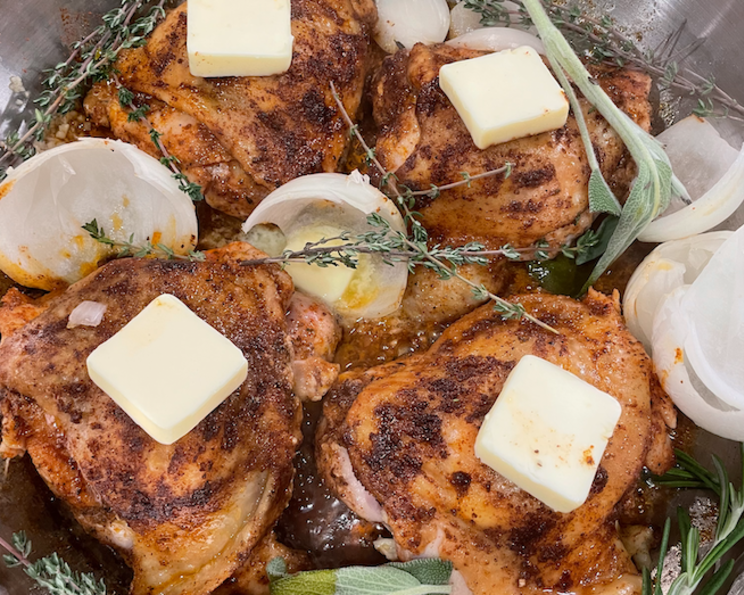
Rosemary, Sage & Thyme Seared, Baked Chicken: A Symphony of Herbs and Savory Goodness
There are certain aromas that instantly transport me back to my grandmother’s kitchen, a place where the air was always thick with the promise of something delicious. This rosemary, sage, and thyme seared, baked chicken is one of those dishes. I can still vividly recall the comforting scent of roasting poultry mingling with the pungent, earthy notes of fresh herbs wafting from her oven. It was a simple dish, yet profound in its ability to bring the family together, a testament to how a few humble ingredients, treated with care, could create pure magic on a plate.
Recipe Overview
- Prep Time: 20 minutes
- Cook Time: 40 minutes
- Total Time: 1 hour
- Servings: 4
- Yield: 4 chicken thighs
- Dietary Type: Gluten-Free
Ingredients
Here’s what you’ll need to create this fragrant and flavorful chicken:
- 4 chicken thighs: Opt for bone-in, skin-on thighs for the best flavor and texture.
- 3/8 cup butter: This is roughly 3/4 of a standard stick. Cut 1 stick into 8 squares for easy distribution.
- 1 yellow onion: Sliced in half and separated into rings.
- 1 unit rosemary: Fresh sprigs are ideal.
- 1 unit sage: Fresh leaves will impart the most flavor.
- 1 unit thyme: Fresh sprigs will bring out their best aromas.
- 1 tablespoon chili powder
- 1/2 tablespoon cayenne powder
- 1 tablespoon Old Bay Seasoning
- 1 tablespoon black pepper
- 1 tablespoon garlic powder
- 1 tablespoon onion powder
- 1 tablespoon Worcestershire sauce
- 1 tablespoon minced garlic
- 2 tablespoons vinegar: Apple cider vinegar or white vinegar will work well.
- 1 lemon or 1 lime: For cleaning and a touch of brightness.
- 2 tablespoons grapeseed oil: Or another high smoke point oil like avocado oil.
Equipment Needed
You’ll want to have these on hand to make the process smooth:
- Oven-safe skillet or cast-iron pan
- Tongs
- Sharp knife
- Cutting board
- Measuring spoons
- Small bowl (for mixing seasonings, optional)
Instructions
Let’s get started on this culinary adventure. Follow these steps carefully for perfectly seared and baked chicken.
- Preheat your oven to 400 degrees Fahrenheit (200 degrees Celsius). This initial high heat will help create a beautiful sear and then cook the chicken through efficiently.
- Prepare the chicken: Rinse the chicken thighs under cool water. In a small bowl, combine the 2 tablespoons vinegar with the juice of 1 lemon or 1 lime. Submerge the chicken in this mixture for a minute or two, then remove and pat the chicken thoroughly dry with paper towels. This step is crucial for achieving a crispy skin.
- Season the chicken: In a separate small bowl, combine the 1 tablespoon chili powder, 1/2 tablespoon cayenne powder, 1 tablespoon Old Bay Seasoning, 1 tablespoon black pepper, 1 tablespoon garlic powder, and 1 tablespoon onion powder. Mix these dry seasonings well. Take your chicken thighs and coat the top of the chicken and under the skin generously with this spice blend. Drizzle about 1 tablespoon of the grapeseed oil over the seasoned chicken and gently massage the seasonings into the meat. Don’t forget to season the bottom of the chicken as well.
- Sear the chicken: Place an oven-safe skillet or cast-iron pan on the stovetop over medium-high heat. Add the remaining 1 tablespoon of grapeseed oil to the hot pan. Once the oil is shimmering, carefully place the chicken thighs into the skillet skin-side down. Sear the chicken for about 3-4 minutes, or until the skin is a beautiful golden brown and almost crisp.
- Flip and add aromatics: Using tongs, flip the chicken thighs over. Now, take the squares of butter and place a square of butter under each chicken skin tightly and on top of each chicken. This will help baste the chicken as it cooks and infuse it with richness.
- Add the herbs and aromatics: Scatter the sliced yellow onion, fresh rosemary sprigs, sage leaves, and thyme sprigs around the chicken in the skillet. Add the 1 tablespoon of minced garlic and 1 tablespoon of Worcestershire sauce to the pan.
- Transfer to the oven: Carefully place the skillet with the chicken and aromatics into the preheated oven. Bake at 400 degrees Fahrenheit (200 degrees Celsius) for 40 minutes.
- Baste for succulence: During the baking process, it’s important to baste the chicken to keep it moist and flavorful. Baste the chicken at the 25-minute mark, the 10-minute mark, and again at the 5-minute mark before it’s done. Use a spoon to scoop the pan juices and pour them over the chicken.
- Rest and serve: Once the 40 minutes are up, carefully remove the skillet from the oven. Let the chicken rest in the pan for about 5-10 minutes before serving. This allows the juices to redistribute, ensuring a tender and succulent bite.
Expert Tips & Tricks
- Patting dry is paramount: I cannot stress enough how vital it is to pat your chicken thighs completely dry after washing. Moisture is the enemy of crispy skin. Use plenty of paper towels to get them as dry as possible before seasoning.
- Don’t overcrowd the pan: If you’re doubling this recipe, cook the chicken in batches. Overcrowding the pan will steam the chicken rather than sear it, and you’ll miss out on that coveted crispy skin.
- Fresh herbs make a difference: While dried herbs can be used in a pinch for the seasoning blend, using fresh rosemary, sage, and thyme in the pan during baking adds an incomparable fragrance and depth of flavor.
- Butter placement: Tucking the butter under the skin allows it to melt and directly infuse the chicken meat with its richness and herbs, while the butter on top helps to brown the skin further and adds to the basting liquid.
- Adjust oven temperatures: Ovens can vary. If your oven tends to run hot or cold, use an oven thermometer to ensure you’re cooking at the correct temperature.
Serving & Storage Suggestions
This Rosemary, Sage & Thyme Seared, Baked Chicken is a versatile dish that pairs beautifully with a variety of sides. For a classic comforting meal, serve it alongside creamy mashed potatoes (perhaps a sour cream cheddar mash for an extra indulgence) and tender steamed or roasted asparagus. The bright acidity from the lemon or lime used in the cleaning process will cut through the richness of the chicken and butter.
If you find yourself with delicious leftovers, store them in an airtight container in the refrigerator for up to 3 days. Reheat gently in the oven at a lower temperature (around 300°F or 150°C) to help retain the chicken’s moisture and crispiness. You can also shred the leftover chicken and use it in sandwiches, salads, or pasta dishes.
Nutritional Information
Here’s an estimated breakdown of the nutritional content for one serving of this chicken dish. Please note that these are approximate values and can vary based on specific ingredient brands and preparation methods.
| Nutrient | Amount per Serving | % Daily Value |
|---|---|---|
| Calories | 460 kcal | – |
| Calories from Fat | 350 kcal | – |
| Total Fat | 39 g | 59% |
| Saturated Fat | 15.7 g | 78% |
| Cholesterol | 124.7 mg | 41% |
| Sodium | 303 mg | 12% |
| Total Carbohydrate | 11.1 g | 3% |
| Dietary Fiber | 2.7 g | 10% |
| Sugars | 2.4 g | 9% |
| Protein | 18.1 g | 36% |
(Note: The % Daily Value is based on a 2,000 calorie diet.)
Variations & Substitutions
While this recipe is fantastic as is, here are a few ways to switch things up:
- Poultry Cuts: This recipe works beautifully with chicken breasts as well. Adjust the searing and baking times accordingly, as breasts cook faster and can dry out if overcooked. Aim for an internal temperature of 165°F (74°C).
- Spice Level: If you prefer less heat, reduce or omit the cayenne powder. For a spicier kick, add a pinch of red pepper flakes to the dry seasoning blend.
- Herbal Infusion: Feel free to experiment with other robust herbs that pair well with chicken, such as thyme, oregano, or even a touch of marjoram.
- Citrus Swap: If you don’t have a lemon, a lime works just as well for the initial cleaning and to add a subtle tang.
FAQs
Q: Why do I need to clean the chicken with vinegar and citrus?
A: This step helps to remove any residual impurities and tenderize the meat slightly, while also preparing the surface for better seasoning adhesion.
Q: Can I use dried herbs instead of fresh?
A: Yes, you can substitute dried herbs, but use about one-third the amount of fresh herbs. For example, use 1 teaspoon of dried rosemary instead of a sprig.
Q: My chicken skin isn’t crispy, what did I do wrong?
A: Ensure the chicken is thoroughly patted dry before seasoning and searing. Also, make sure your pan is hot enough before adding the chicken, and avoid overcrowding the pan.
Q: Can I make this dish ahead of time?
A: It’s best to cook this dish fresh. However, you can prepare the dry seasoning blend and chop the onions in advance to save time.
Q: What is the best way to tell when the chicken is cooked through?
A: The most reliable way is to use an instant-read thermometer. Insert it into the thickest part of the thigh, avoiding the bone. The chicken is done when it reaches an internal temperature of 165°F (74°C). Juices should also run clear when pierced.
Final Thoughts
This Rosemary, Sage & Thyme Seared, Baked Chicken is more than just a recipe; it’s an experience. It’s a testament to the power of simple, honest ingredients and the magic that happens when they are brought together with care and intention. Whether you’re a seasoned home cook or just starting your culinary journey, I encourage you to try this dish. The aroma that fills your kitchen as it bakes is reward enough, but the succulent, herb-infused chicken that emerges will truly delight your taste buds. Serve it with pride, and savor every flavorful bite. I love pairing this with a crisp white wine, like a Sauvignon Blanc, to complement the herbaceous notes. Enjoy, and don’t forget to share your creations!