
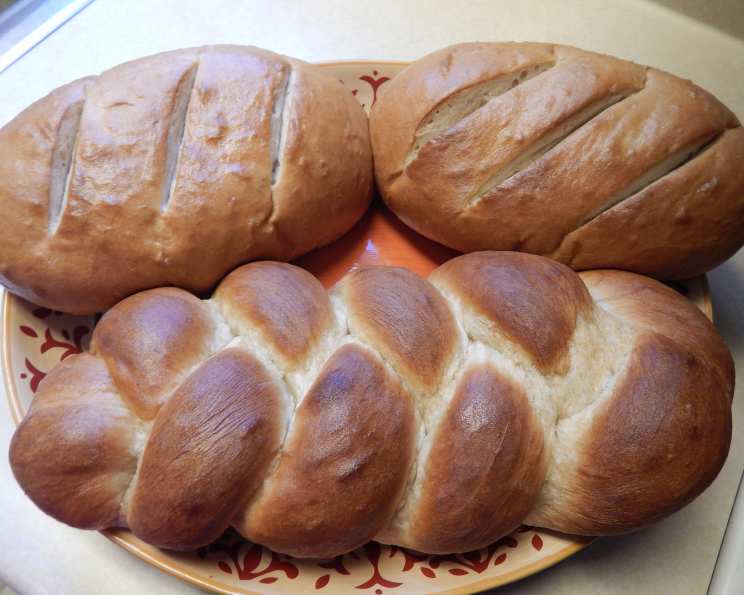
Rose’s Hearth Bread: A Testament to Simple Perfection
There are certain recipes that, from the first encounter, feel like an old friend. Rose’s Hearth Bread, for me, is one of those. I remember finding its unassuming recipe on the back of a bag of Gold Medal “Best for Bread” flour, crediting the incomparable Rose Levy Beranbaum and her seminal work, “The Bread Bible.” It promised ease, versatility, and most importantly, a deeply satisfying, hearty loaf. The first time I baked it, the aroma that filled my kitchen was pure, unadulterated comfort – a warm hug in the form of freshly baked bread, with a crust that promised a delightful chew and a crumb that was just begging for a slather of butter. The notion that something so profoundly delicious could be so approachable felt like a culinary revelation.
Recipe Overview
- Prep Time: Approximately 1 hour 45 minutes (including rising time)
- Cook Time: 25-30 minutes
- Total Time: Approximately 2 hours 10 minutes – 2 hours 15 minutes
- Servings: 1 loaf
- Yield: 1 round loaf
- Dietary Type: Vegetarian
Ingredients
This recipe champions the beauty of simple, high-quality ingredients. The magic lies in their careful combination and the patient process of fermentation.
- 3 1⁄3 cups bread flour, plus more for dusting
- 1⁄4 cup whole wheat flour
- 1 1⁄2 teaspoons fine sea salt
- 1 1⁄4 teaspoons yeast (instant or active dry)
- 1 1⁄3 cups water, lukewarm
- 1 teaspoon honey
Optional Stir-ins (choose up to 1/4 cup total):
- Kalamata olives, roughly chopped
- Roasted garlic cloves, mashed or left whole
- Sun-dried tomatoes, cut into small pieces
- Fresh chives, finely sliced
- Shelled sunflower seeds
- Fresh herbs (rosemary, thyme), finely chopped (1 teaspoon fresh)
- Dried herbs (rosemary, thyme), (1/2 teaspoon dried)
Equipment Needed
- Medium mixing bowl
- Large mixing bowl
- Plastic wrap
- Cookie sheet
- Parchment paper (or cornmeal for dusting)
- Baking stone
- Oven
- Shallow pan (for water)
- Cooling rack
- Sharp knife or lame for scoring
Instructions
The journey to a perfect hearth bread is a rewarding one, marked by patience and attention to detail. Follow these steps to achieve a loaf that is both rustic and refined.
- In a medium bowl, begin by whisking together the bread flour, whole wheat flour, fine sea salt, and yeast. Ensure they are thoroughly combined.
- Add the lukewarm water and honey to the dry ingredients. Stir with a spoon or spatula until a shaggy dough begins to form.
- Turn the dough out onto a lightly floured surface. Knead the dough until it becomes smooth and springy. It should feel slightly sticky to the touch. If it feels too wet, add a tiny bit more flour, a tablespoon at a time. If it seems too dry, add a teaspoon of water. Aim for a pliable, yet manageable dough.
- Lightly brush the inside of a large bowl with a neutral oil. Place the kneaded dough into the oiled bowl, turning it to coat all sides. This prevents the dough from drying out as it rises.
- Cover the bowl tightly with plastic wrap. Find a warm place for the dough to rise. This could be a slightly warmed oven (turned off, of course), near a sunny window, or in a consistently warm spot in your kitchen. Let the dough rise for about 1 hour, or until it has doubled in size.
- While the dough is rising, prepare your baking setup. Line a cookie sheet with cooking parchment paper, or lightly sprinkle it with cornmeal if you prefer.
- Once the dough has doubled, gently push your fist into the center of the dough to deflate it. This is a crucial step to release the accumulated gases and create a finer crumb.
- Shape the dough into a round ball. Be gentle, you’re not aiming for a tight shaping here, just a simple, rustic round.
- Place the shaped dough onto your prepared cookie sheet. Cover it again with oiled plastic wrap. Return it to a warm place to rise for another 45 minutes.
- While the dough is undergoing its second rise, preheat your oven to 475°F (245°C). Place a baking stone on the lowest oven rack. This is key to achieving a beautifully crisp bottom crust.
- Just before baking, carefully cut an X-shaped slash on the top of the dough using a sharp knife or a baker’s lame. This helps control the oven spring and gives the bread its characteristic rustic appearance. Immediately spray the top of the dough with cool water. This creates steam in the oven, which is essential for a good crust.
- Place the cookie sheet with the dough into the preheated oven, directly onto the baking stone. Simultaneously, place one cup of water in a shallow pan on the other rack in the oven. This water will create the necessary steam.
- Bake for 10 minutes at 475°F (245°C).
- After 10 minutes, reduce the oven temperature to 425°F (220°C).
- Continue to bake for an additional 15-20 minutes, or until the bread is golden brown and sounds hollow when tapped on the bottom. To ensure it’s fully baked, insert a skewer into the center; it should come out clean.
- Once baked to perfection, carefully remove the bread from the oven and place it completely on a cooling rack. This allows air to circulate around the entire loaf, preventing a soggy bottom and ensuring the crust remains crisp.
Expert Tips & Tricks
- Flour Power: The combination of bread flour and whole wheat flour is deliberate. Bread flour provides the necessary gluten development for structure, while the whole wheat flour adds a subtle nutty flavor and a heartier texture.
- The Power of Steam: Don’t skip the water pan! The steam generated in the initial stages of baking is crucial for a thin, crispy crust and a good oven spring.
- Temperature is Key: Ensure your water is lukewarm, not hot, as too hot water can kill the yeast. A good rule of thumb is that it should feel comfortably warm to the touch, around 105-115°F (40-46°C).
- Visual Cues: While timers are helpful, learn to rely on your senses. The color of the crust and the sound when tapping the bottom of the loaf are excellent indicators of doneness.
- Embrace the Stickiness: A slightly sticky dough is often a sign of good hydration, which contributes to a moist and tender crumb. Resist the urge to add too much extra flour during kneading.
Serving & Storage Suggestions
This Rose’s Hearth Bread is a revelation served simply with good quality butter. It’s also the perfect accompaniment to hearty soups, stews, or a cheese board. For a truly decadent experience, consider topping slices with a drizzle of olive oil, a sprinkle of sea salt, and some fresh herbs.
Leftovers can be stored at room temperature, wrapped tightly in a bread bag or a clean kitchen towel, for up to 2-3 days. If you anticipate not finishing it within that time, it freezes beautifully. Wrap individual slices or the whole loaf tightly in plastic wrap, then in aluminum foil, and freeze for up to 3 months. To reheat, thaw at room temperature and then briefly toast or warm in a 300°F (150°C) oven for a few minutes to revive its crispness.
Nutritional Information
(Please note: Nutritional information is an estimate and can vary based on specific ingredients and portion sizes.)
| Nutrient | Amount per Serving | % Daily Value |
|---|---|---|
| Calories | 138 kcal | |
| Calories from Fat | ||
| Total Fat | 0.4 g | 0% |
| Saturated Fat | 0.1 g | 0% |
| Cholesterol | 0 mg | 0% |
| Sodium | 292.4 mg | 12% |
| Total Carbohydrate | 28.9 g | 9% |
| Dietary Fiber | 1.3 g | 5% |
| Sugars | 0.6 g | 2% |
| Protein | 4.1 g | 8% |
Variations & Substitutions
The beauty of this bread lies in its adaptability. The optional stir-ins are a fantastic starting point, but don’t be afraid to experiment:
- Herbaceous Delight: Incorporate finely chopped fresh rosemary, thyme, or even a touch of sage into the dough during the initial kneading.
- Cheesy Goodness: Add 1/4 cup of grated sharp cheddar or Parmesan cheese along with the optional stir-ins for a savory twist.
- Seeded Sensation: Mix in a tablespoon or two of poppy seeds, sesame seeds, or flax seeds for added texture and flavor.
- A Touch of Sweetness: For a slightly sweeter loaf, you can increase the honey to 1 1/2 teaspoons, though the current amount provides a subtle background note.
FAQs
Q: Why is my bread not rising as much as expected?
A: Ensure your yeast is fresh and active. Also, check that your rising environment is consistently warm, avoiding drafts.
Q: My crust is too soft. What can I do?
A: Make sure to use the water pan for steam during the initial baking period and consider baking for a few extra minutes at the end, ensuring the internal temperature reaches at least 200°F (93°C).
Q: Can I make this bread ahead of time?
A: Yes, after the first rise, you can refrigerate the dough overnight. Bring it back to room temperature for about an hour before shaping and proceeding with the second rise and baking.
Q: What if I don’t have a baking stone?
A: While a baking stone is ideal, you can bake this bread directly on a preheated heavy-duty baking sheet. It might result in a slightly less crisp bottom crust.
Q: How do I know if the bread is fully baked?
A: The bread should be a deep golden brown, and when you tap the bottom, it should sound hollow. An instant-read thermometer inserted into the center should register between 200-210°F (93-99°C).
Final Thoughts
Rose’s Hearth Bread is more than just a recipe; it’s an invitation to experience the profound satisfaction of creating something truly nourishing with your own hands. It’s a bread that speaks of comfort, tradition, and the simple joy of breaking bread together. I encourage you to embrace its straightforward elegance, experiment with the delightful variations, and share this wonderful loaf with those you hold dear. Its honest, hearty character pairs beautifully with a robust red wine or a comforting cup of herbal tea. Happy baking!