
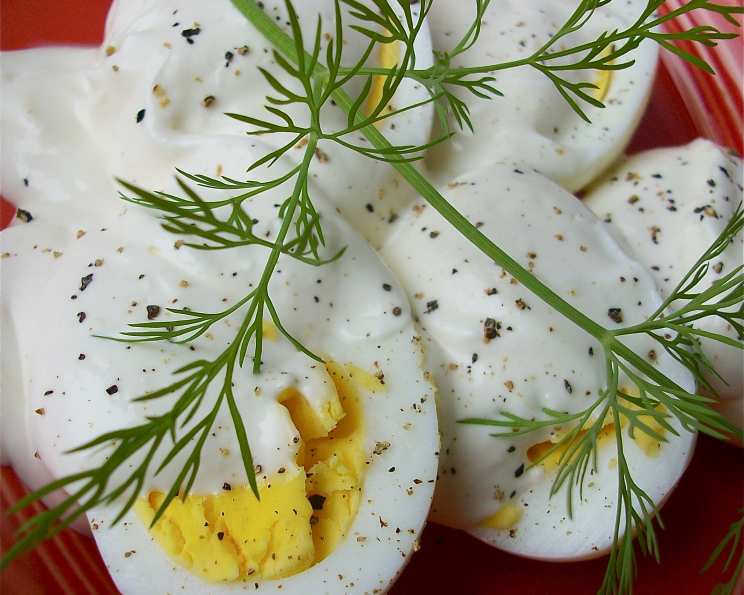
Russian Eggs with Horseradish Sauce: A Taste of Nostalgia
There are certain dishes that, for a chef, aren’t just about ingredients and technique; they’re tangible links to memories, to places, and to people. Russian Eggs, in their deceptively simple elegance, transport me back to my grandmother’s kitchen in St. Petersburg. The air would be thick with the aroma of dill and something rich and tangy, and there, nestled on a chilled silver platter, would be these beautiful halves of perfectly cooked eggs, shimmering under a creamy, sharp sauce. It was a dish that felt both humble and utterly luxurious, a testament to how a few quality ingredients, treated with care, can create something truly memorable.
Recipe Overview
- Prep Time: 10 minutes
- Cook Time: 15 minutes (for boiling eggs) + 30 minutes (chilling)
- Total Time: 45 minutes
- Servings: 6
- Yield: 6 servings (12 halves)
- Dietary Type: Vegetarian
Ingredients
- 6 large eggs, hard-boiled
- 1 teaspoon prepared horseradish
- 1/2 cup mayonnaise
- 1/2 cup sour cream
- Salt, to taste
- Freshly ground black pepper, to taste
Equipment Needed
- Medium saucepan (for boiling eggs)
- Slotted spoon
- Small bowl
- Whisk or fork
- Serving platter
- Knife
Instructions
Embarking on the creation of Russian Eggs with Horseradish Sauce is a delightful journey into simple, elegant comfort food. The beauty of this dish lies in its straightforward assembly, allowing the quality of the ingredients to shine.
-
Prepare the Eggs: Begin by carefully hard-boiling the 6 large eggs. Place the eggs in a medium saucepan and cover them with cold water by about an inch. Bring the water to a rolling boil over medium-high heat. Once boiling, immediately remove the pan from the heat, cover it tightly with a lid, and let the eggs sit for 12 minutes. After 12 minutes, carefully drain the hot water and run cold water over the eggs, or transfer them to an ice bath, to stop the cooking process and make them easier to peel. Allow them to cool until they are comfortable to handle.
-
Halve the Eggs: Once the hard-boiled eggs are cooled, gently peel them. Using a sharp knife, carefully cut each egg in half lengthwise. The yolks should be firm and evenly cooked. Arrange these perfectly halved eggs, cut-side up, on your serving platter. Ensure they are spaced attractively, ready to be adorned with the creamy sauce.
-
Craft the Horseradish Sauce: In a small bowl, combine the 1/2 cup of mayonnaise and the 1/2 cup of sour cream. Add the 1 teaspoon of prepared horseradish. Whisk these ingredients together until they are thoroughly combined and have a smooth, creamy consistency. This is where the magic happens – the tang of the horseradish, the richness of the mayonnaise, and the slight acidity of the sour cream create a harmonious flavor profile that perfectly complements the eggs.
-
Season the Sauce: Season the horseradish sauce generously with salt and freshly ground black pepper to your personal preference. Taste and adjust the seasoning as needed. A little extra pepper can add a pleasant bite, and the salt will enhance all the flavors.
-
Dress the Eggs: Gently pour the prepared horseradish sauce evenly over the arranged halved eggs on the serving platter. Ensure each egg half is generously coated. You can use a spoon to help distribute the sauce if necessary, aiming for a luscious, blanket-like covering.
-
Chill and Serve: This is a crucial step for allowing the flavors to meld beautifully. Chill the platter of dressed eggs for at least 30 minutes in the refrigerator. This cooling period not only allows the sauce to firm up slightly but also ensures the flavors meld together, resulting in a more cohesive and enjoyable dish.
Expert Tips & Tricks
- Perfectly Peeled Eggs: For easier peeling, add a teaspoon of vinegar or baking soda to the boiling water. Once the eggs are cooked and shocked in ice water, gently crack the shell all over and start peeling from the wider end, where the air pocket usually is.
- Adjusting the Horseradish: The amount of horseradish is a personal preference. If you enjoy a spicier kick, feel free to add a little extra. Conversely, if you prefer a milder tang, start with less and add more to taste.
- Creamy Consistency: If you find your sauce is a little too thick, you can thin it out with a tiny splash of milk or even a touch more sour cream, but be careful not to make it too runny.
- Garnish for Elegance: While not explicitly in the recipe, a sprinkle of finely chopped fresh dill or chives over the finished dish before serving adds a beautiful pop of color and a fresh, herbaceous note that is quintessentially Russian.
Serving & Storage Suggestions
Russian Eggs with Horseradish Sauce are best served chilled. Present them on a decorative platter, perhaps garnished with a sprig of fresh dill or parsley. They make a fantastic appetizer, a light lunch, or a side dish.
Leftovers can be stored in an airtight container in the refrigerator for up to 2 days. The sauce might separate slightly upon standing; simply stir it well before serving again. It is not recommended to freeze this dish, as the texture of the mayonnaise and sour cream can be compromised.
Nutritional Information
| Nutrient | Amount per Serving | % Daily Value |
|---|---|---|
| Calories | 185.3 kcal | |
| Calories from Fat | ||
| Total Fat | 15.1 g | 23% |
| Saturated Fat | 4.7 g | 23% |
| Cholesterol | 201.1 mg | 67% |
| Sodium | 228.2 mg | 9% |
| Total Carbohydrate | 5.7 g | 1% |
| Dietary Fiber | 0 g | 0% |
| Sugars | 2.2 g | 8% |
| Protein | 6.9 g | 13% |
Note: Nutritional information is an estimate and may vary based on specific ingredients used.
Variations & Substitutions
While the classic rendition is wonderfully satisfying, there’s always room for a touch of personal flair.
- Creamier Sauce: For an even richer sauce, you could substitute half of the mayonnaise with crème fraîche or a good quality full-fat Greek yogurt.
- A Touch of Spice: If you want to elevate the heat, a tiny pinch of cayenne pepper or a dash of hot sauce can be added to the horseradish sauce.
- Herbal Infusion: As mentioned in the tips, finely chopped fresh dill or parsley is a classic addition. You could also experiment with a hint of finely chopped chives or even a touch of finely minced red onion for a bit of sharpness.
- Smoked Paprika Drizzle: For a visual and flavorful twist, a very light drizzle of smoked paprika-infused olive oil over the top can add a sophisticated smoky note.
FAQs
Q: How do I ensure my hard-boiled eggs are not overcooked?
A: The method of removing the eggs from the heat and letting them sit in the hot water for a specific duration, followed by an ice bath, is key to preventing overcooking and achieving a perfectly firm yolk.
Q: Can I make the horseradish sauce ahead of time?
A: Yes, you can prepare the sauce a few hours in advance and store it covered in the refrigerator. Whisk it again before spooning it over the eggs.
Q: What is the best way to serve Russian Eggs?
A: They are best served chilled as an appetizer or a light snack. They also pair wonderfully with dark rye bread or small blinis.
Q: Is it important to chill the eggs before serving?
A: Yes, chilling is essential. It allows the flavors of the sauce to meld with the eggs and also provides a refreshing contrast to the richness of the sauce.
Q: Can I add anything to the eggs themselves?
A: While the classic preparation is unadulterated eggs, some variations include adding finely chopped hard-boiled egg yolks back into the sauce for extra richness, though this recipe focuses on simplicity.
Final Thoughts
This dish, so simple yet so profound, is a testament to the power of well-loved recipes passed down through generations. It’s a dish that evokes comfort, warmth, and a sense of shared history. Whether you’re rediscovering a taste from your own heritage or exploring new culinary horizons, Russian Eggs with Horseradish Sauce offer a delightful and satisfying experience. Serve it at your next gathering as a conversation-starting appetizer, or simply enjoy it as a quiet moment of delicious reflection. I often pair mine with a crisp shot of chilled vodka, a nod to its origins, or a glass of dry white wine to cut through the richness of the sauce. Enjoy the journey!