
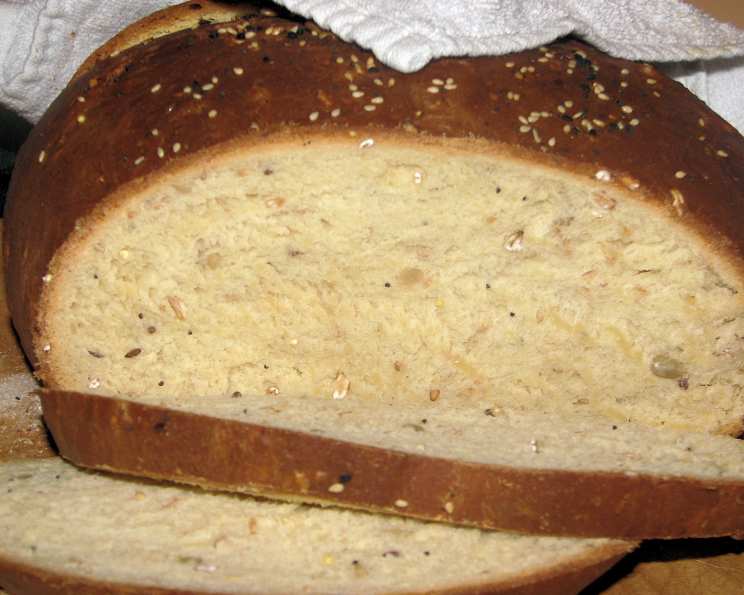
Rustic Country Sourdough Bread: A Symphony of Simplicity and Flavor
There’s a particular kind of magic that happens when flour, water, and time converge to create something as fundamental and satisfying as a loaf of bread. For me, the aroma of freshly baked sourdough is a Proustian madeleine, transporting me back to my grandmother’s kitchen. She wasn’t a professional baker, mind you, but her hands, weathered from a lifetime of tending her garden and her family, possessed an innate understanding of dough. The loaves she pulled from her oven were never perfectly shaped, often slightly lopsided, but their crusts crackled with an audible promise of the chewy, tangy interior. This recipe, with its nod to a slightly more modern approach while retaining that rustic charm, feels like a loving homage to those simpler times.
Recipe Overview
- Prep Time: 3 hours 30 minutes (includes rising time)
- Cook Time: 30 to 35 minutes
- Total Time: 3 hours 30 minutes to 3 hours 35 minutes
- Yields: 2 loaves
- Serves: 20 (assuming 1/10th of a loaf per serving)
- Dietary Type: Vegetarian
Ingredients
This recipe leverages the power of a stand mixer to make the process wonderfully straightforward, allowing the KitchenAid to do the heavy lifting. The inclusion of sourdough starter adds that characteristic tangy depth, while a touch of sweetness and richness from eggs and sunflower oil contributes to a beautiful crumb and crust.
- 4 1/2 teaspoons dry active yeast (equivalent to 2 standard packages of dry yeast)
- 1 1/4 cups warm water (aim for a temperature between 105-110 degrees Fahrenheit)
- 1 cup sourdough starter (ensure it’s at room temperature)
- 1/4 cup Splenda granular (or your preferred granulated sweetener)
- 3/4 tablespoon kosher salt
- 2 large eggs, beaten
- 1/4 cup sunflower oil, plus more for greasing
- 4 to 5 cups unbleached all-purpose flour, divided
- Melted butter, for brushing (optional, but highly recommended)
Equipment Needed
- Stand mixer (with dough hook attachment)
- Measuring cups and spoons
- Large bowl (for greasing and rising)
- Two 9x5x3 inch loaf pans
- Wire cooling rack
Instructions
The beauty of this recipe lies in its elegant simplicity, allowing the stand mixer to transform basic ingredients into artisanal bread. We’ll guide the dough through its crucial rising phases, ensuring a light, airy crumb and a perfectly developed flavor.
-
Activate the Yeast: In the bowl of your stand mixer, combine the warm water and dry active yeast. Give it a gentle stir and let it stand for about 5 minutes. You should see the yeast begin to foam and bloom, indicating it’s alive and ready to work its magic.
-
Prepare the Mixer Bowl: While the yeast is activating, you can give your stand mixer bowl a quick warm-up. Fill it with hot water, let it sit for 10-15 minutes, then carefully dump out the water and dry it thoroughly with a clean towel. This gentle warmth helps create an ideal environment for the dough to rise.
-
Incorporate Wet Ingredients and Starter: To the bloomed yeast mixture in the mixer bowl, add the sourdough starter, Splenda granular, kosher salt, beaten eggs, and sunflower oil. Stir these together on speed 1 until just combined.
-
Add Flour and Knead: Begin gradually adding the unbleached flour. Start with 3 cups, and then continue adding it, about a half cup at a time, while the mixer is still on speed 1. Increase the speed to medium (around speed 2 or 3 on most KitchenAid mixers) and continue mixing until the dough starts to pull away from the sides of the mixing bowl. This process, where the dough begins to gather itself into a cohesive mass, should take approximately 8 minutes. You might not need all 5 cups of flour; the key is the dough’s consistency.
-
First Rise: Generously grease a large bowl with sunflower oil. Transfer the kneaded dough to this bowl, turning it to ensure the entire surface is lightly coated in oil. This prevents a dry crust from forming. Cover the bowl tightly with plastic wrap or a clean kitchen towel. Place the bowl in a warm place (around 85 degrees Fahrenheit), free from drafts, for 1 to 1 1/2 hours, or until the dough has doubled in bulk.
-
Shape the Loaves: Once the dough has risen, punch it down gently to release the trapped gases. Turn the dough out onto a lightly floured surface and divide it in half. Shape each half into your desired loaf form. (This is also the point where you could divide the dough into smaller portions to create delicious dinner rolls!).
-
Second Rise: Grease your two 9x5x3 inch loaf pans. Carefully place each shaped loaf into a prepared pan. Lightly brush the tops of the loaves with sunflower oil. Cover the pans again and let the loaves rise in a warm place (around 85 degrees Fahrenheit), again free from drafts, for about 1 hour, or until they have doubled in bulk once more.
-
Bake the Bread: Preheat your oven to 375 degrees Fahrenheit. Once the oven is preheated and the loaves have completed their second rise, place the pans into the oven. Bake for 30 to 35 minutes. The bread is done when the loaves sound hollow when tapped on the bottom or sides.
-
Finish and Cool: Immediately remove the loaves from their pans and place them on a wire cooling rack. While the bread is still warm, brush the tops with melted butter for an extra touch of richness and a beautiful sheen. Allow the bread to cool completely before slicing and serving. This step is crucial for the crumb structure to set properly.
Expert Tips & Tricks
The secret to truly exceptional sourdough lies in patience and understanding the dough’s temperament. The use of sourdough starter in this recipe, even alongside commercial yeast, adds a complex layer of flavor that develops beautifully during the rising and baking process. Ensure your sourdough starter is active and bubbly before you begin; this guarantees optimal flavor and rise. If your kitchen is on the cooler side, you can create a warm environment for rising by placing the covered bowl in a slightly warmed, then turned-off oven, or even in a microwave with a cup of hot water inside (just don’t turn the microwave on!).
Serving & Storage Suggestions
This Rustic Country Sourdough Bread is incredibly versatile. Serve it warm, fresh from the oven, with a generous smear of good quality butter. It’s the perfect accompaniment to hearty soups, stews, or a simple plate of cheese and charcuterie. For breakfast, it’s sublime toasted and topped with jam or avocado.
Leftovers can be stored at room temperature in a bread box or a loosely tied plastic bag for up to 3 days. To revive slightly stale loaves, you can lightly mist them with water and re-warm them in a 350°F oven for 5-10 minutes. For longer storage, the bread freezes beautifully. Wrap the cooled loaves tightly in plastic wrap, then in aluminum foil, and freeze for up to 3 months. Thaw at room temperature.
Nutritional Information
Please note: This is an estimated nutritional breakdown and can vary based on specific ingredients used.
| Nutrient | Amount per Serving | % Daily Value |
|---|---|---|
| Calories | 125.2 | |
| Calories from Fat | ||
| Total Fat | 3.5 g | 5% |
| Saturated Fat | 0.6 g | 2% |
| Cholesterol | 18.6 mg | 6% |
| Sodium | 270.1 mg | 11% |
| Total Carbohydrate | 19.5 g | 6% |
| Dietary Fiber | 0.9 g | 3% |
| Sugars | 0.1 g | 0% |
| Protein | 3.6 g | 7% |
Variations & Substitutions
While this recipe is fantastic as is, feel free to experiment! For a whole wheat variation, substitute up to half of the all-purpose flour with whole wheat flour. You may need to add a touch more liquid as whole wheat flour absorbs more water. For a touch of sweetness and texture, consider adding seeds like sesame seeds, poppy seeds, or sunflower seeds to the dough during the last few minutes of kneading, or sprinkle them on top before the second rise. If you prefer a slightly richer loaf, you can substitute some of the sunflower oil with melted butter or even a mild olive oil.
FAQs
Q: Can I make this bread without a stand mixer?
A: Absolutely! While a stand mixer makes kneading easier, you can certainly achieve excellent results by hand. You’ll need to knead the dough on a lightly floured surface for about 10-15 minutes until it’s smooth and elastic.
Q: My sourdough starter isn’t very active. Will this recipe still work?
A: While an active starter is ideal for flavor, this recipe includes commercial yeast, which will provide a reliable rise. However, the characteristic tangy flavor might be less pronounced with a less active starter.
Q: Why is my bread dense?
A: A dense loaf can result from several factors: not allowing the dough to rise sufficiently, over-kneading, or not baking at the correct temperature. Ensure you’re giving the dough adequate time to double in bulk in a warm environment.
Q: Can I use bread flour instead of all-purpose flour?
A: Yes, using bread flour will result in a chewier loaf with a slightly more robust crust due to its higher protein content. You may need to adjust the amount of flour slightly as bread flour can absorb more liquid.
Q: How do I know if the bread is truly baked through?
A: The most reliable test is the “hollow tap” test. When you tap the bottom or sides of the loaf, it should sound distinctly hollow. You can also use an instant-read thermometer; the internal temperature should be around 200-210°F (93-99°C).
Final Thoughts
There’s a profound satisfaction in pulling a golden-brown, aromatic loaf of Rustic Country Sourdough Bread from your oven. It’s a testament to the power of simple ingredients and a little bit of patience. This recipe is a journey back to the heart of home baking, promising not just sustenance, but a moment of pure culinary joy. I encourage you to give it a try, share the experience with loved ones, and savor every delicious, crusty bite. Perhaps pair it with a hearty vegetable soup or a light, crisp salad for a truly comforting meal.