
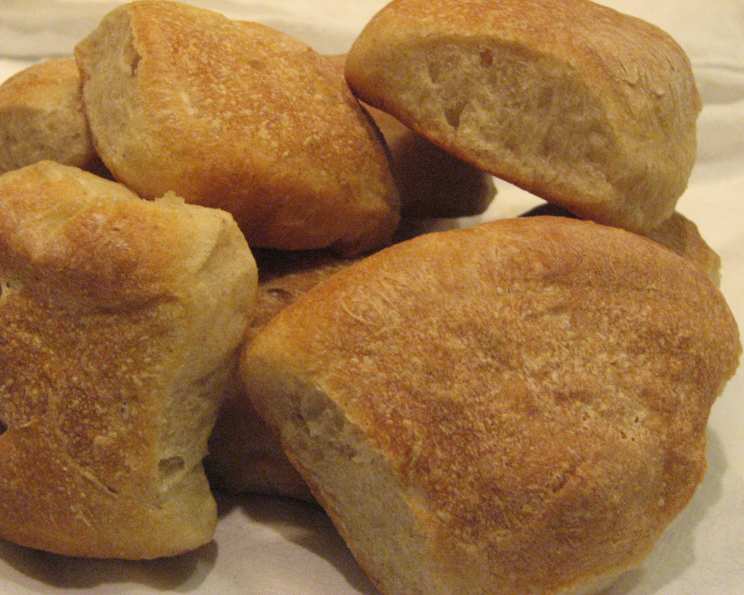
Rustic Dinner Rolls: A Symphony of Crust and Crumb
There’s something profoundly satisfying about the aroma of freshly baked bread wafting through the house, a scent that instantly evokes warmth and welcomes. For me, it’s more than just food; it’s a memory. I recall my grandmother’s kitchen, a cozy sanctuary where flour dusted every surface and the air hummed with the quiet magic of yeast at work. She’d often bake simple, honest rolls, the kind that whispered tales of the old country with their delightfully crisp crust and impossibly airy interiors. That description from Cook’s Illustrated Magazine – “airy crumb and yeasty, savory flavor and a crust so crisp it practically shatters when you bite into it, yet chewy enough to offer satisfying resistance” – resonated deeply, a perfect echo of those cherished moments. This recipe, with its thoughtful approach to dough hydration and baking technique, captures that essence beautifully, transforming humble ingredients into something truly special.
Recipe Overview
- Prep Time: Approximately 45 minutes (excluding rising time)
- Cook Time: 20-25 minutes
- Total Time: Approximately 2 hours 10 minutes (including rising time)
- Servings: 16
- Yield: 16 rolls
- Dietary Type: Vegetarian
Ingredients
This recipe celebrates the beauty of simplicity, relying on basic pantry staples to create something extraordinary. The addition of a touch of whole wheat flour adds a subtle earthiness, while honey provides just the right hint of sweetness to balance the savory notes.
- 1 ½ cups warm water, plus 1 tablespoon (weighing 12 ½ ounces)
- 1 ½ teaspoons instant yeast
- 2 teaspoons honey
- 3 cups bread flour, plus 1 tablespoon (weighing 16 ½ ounces)
- 3 tablespoons whole wheat flour (about 1 ounce)
- 1 ½ teaspoons salt
Equipment Needed
- Stand mixer with dough hook
- Large bowl (at least 2-quart capacity)
- Plastic wrap
- Bench scraper
- Two 9-inch round cake pans
- Nonstick cooking spray
- R immed baking sheet
- Wire rack
Instructions
The journey to these remarkable rolls is a testament to patience and precision. While there are a few steps involved, each one plays a crucial role in developing the dough’s structure and achieving that signature rustic character.
- In the bowl of your stand mixer, whisk together the warm water, yeast, and honey. Ensure that no honey remains clinging to the bottom of the bowl, as this can hinder the yeast’s activation.
- Attach the dough hook to your mixer. Add the bread flour and whole wheat flour to the bowl. Mix on low speed until a cohesive dough begins to form, which should take about 3 minutes.
- Cover the mixer bowl tightly with plastic wrap and let it sit undisturbed at room temperature for 30 minutes.
- Remove the plastic wrap. Evenly sprinkle the salt over the surface of the dough.
- Knead the dough on low speed for 5 minutes. If you notice the dough creeping up the dough hook, stop the mixer, scrape down the sides of the bowl using well-floured hands or a greased spatula, and then resume kneading.
- Increase the mixer’s speed to medium and continue to knead for another 1 minute, or until the dough is smooth and feels slightly tacky to the touch.
- If the dough feels excessively sticky, add 1 to 2 tablespoons of flour, one tablespoon at a time, and continue mixing for an additional minute after each addition.
- Lightly spray a 2-quart bowl with nonstick cooking spray. Transfer the dough to this prepared bowl and cover it with plastic wrap.
- Place the bowl in a warm, draft-free place to rise until the dough has doubled in size. This typically takes about 1 hour.
- Once the dough has doubled, fold the dough over itself by gently pushing it inward from the edges. Rotate the bowl a quarter turn and fold again. Rotate the bowl once more and fold the dough for a third time.
- Repeat the entire “fold three times and rest for 30 minutes” step a second time. This is a crucial step for developing gluten structure and achieving that desired airy crumb. After folding, cover the bowl with plastic wrap and let it rest for 30 minutes.
- While the dough rests, spray two 9-inch round cake pans with nonstick cooking spray and set them aside.
- After the rest period, transfer the dough to a lightly floured work surface. Sprinkle the top of the dough with a little more flour.
- Using a bench scraper, cut the dough in half. Gently stretch each half into a 16-inch cylinder.
- Divide each cylinder into quarters, then divide each quarter into 2 pieces. You should end up with a total of 16 pieces of dough. Dust the top of each piece with a bit more flour.
- With floured hands, gently pick up each piece of dough and roll it in your palms to coat it with flour, shaking off any excess.
- Place the prepared dough pieces into the prepared cake pans. Arrange 8 dough pieces in each pan, placing 1 piece in the center and the remaining 7 around it. Ensure that the cut side of each piece faces upwards.
- Loosely cover the pans with plastic wrap and allow the rolls to rise until they have doubled in size, which usually takes about 30 minutes. The dough is ready when it springs back slowly when gently pressed with a finger.
- Thirty minutes before you plan to bake, adjust an oven rack to the middle position and preheat your oven to 500 degrees Fahrenheit.
- Remove the plastic wrap from the pans. Lightly spray the tops of the rolls with water.
- Carefully place the filled pans into the preheated oven. Bake for 10 minutes, or until the tops of the rolls are starting to turn brown.
- Remove the pans from the oven. Reduce the oven temperature to 400 degrees Fahrenheit.
- Using kitchen towels or oven mitts, invert the rolls from both pans onto a rimmed baking sheet.
- Once the rolls are cool enough to handle, turn them right side up. Pull them apart from each other and space them evenly on the baking sheet.
- Continue to bake until the rolls develop a deep golden brown crust and sound hollow when tapped on the bottom. This will take an additional 10 to 15 minutes. Rotate the baking sheet halfway through this baking time to ensure even browning. (The initial partial bake in the pans helps set their shape during rising, but transferring them to the baking sheet ensures the finished rolls are gloriously golden and crisp all around).
- Transfer the finished rolls to a wire rack and allow them to cool completely to room temperature.
Expert Tips & Tricks
- Hydration is Key: This recipe uses a relatively wet dough, which is vital for achieving that signature airy crumb. Don’t be tempted to add too much extra flour during the kneading process; a slightly sticky dough is a good thing here.
- The Fold-and-Rest Method: The repeated folding and resting steps are essential for building gluten strength without overworking the dough. This technique allows the dough to relax and develop elasticity, leading to a lighter texture.
- High Initial Heat: The initial blast of heat at 500 degrees Fahrenheit is crucial for creating that incredible, shattering crust. Don’t shy away from it! The subsequent reduction in temperature allows the interior to cook through without burning the exterior.
- Steam for Crust: Lightly spraying the rolls with water before they go into the oven creates a burst of steam. This helps the crust to expand and crisp up beautifully, giving them that authentic rustic texture.
- Listen for Doneness: The tap-test is your best friend when it comes to baked bread. A hollow sound indicates that the interior is cooked through and the crust is perfectly crisp.
Serving & Storage Suggestions
These rustic dinner rolls are at their absolute best served warm, straight from the oven, where their crust is at its most glorious. They are the perfect accompaniment to almost any meal – think hearty stews, roasted meats, or a simple, elegant soup. For a touch of decadence, a generous smear of good quality butter is all they need.
To store any leftovers, allow the rolls to cool completely to room temperature. Store them in a paper bag or a bread box at room temperature for up to 2 days. For longer storage, you can freeze them. Wrap them tightly in plastic wrap, then in foil, and freeze for up to 2-3 months. To reheat, thaw overnight at room temperature, then warm them in a 350°F oven for 5-10 minutes until crisp.
Nutritional Information
| Nutrient | Amount per Serving | % Daily Value |
|---|---|---|
| Calories | 94 kcal | |
| Calories from Fat | ||
| Total Fat | 0.3 g | 0% |
| Saturated Fat | 0.1 g | 0% |
| Cholesterol | 0 mg | 0% |
| Sodium | 219.4 mg | 9% |
| Total Carbohydrate | 19.8 g | 6% |
| Dietary Fiber | 0.9 g | 3% |
| Sugars | 0.8 g | 3% |
| Protein | 2.8 g | 5% |
Please note: Nutritional values are estimates and can vary based on specific ingredients and brands used.
Variations & Substitutions
While this recipe is truly wonderful as is, there’s always room for a touch of creativity:
- Herbed Rolls: Incorporate a tablespoon or two of finely chopped fresh herbs like rosemary, thyme, or chives into the dough during the final kneading stage for an aromatic twist.
- Seeded Rolls: Before the final rise, brush the tops of the rolls with a little water and sprinkle them with sesame seeds, poppy seeds, or everything bagel seasoning.
- Whole Grain Love: For an even heartier roll, you could substitute up to half of the bread flour with white whole wheat flour or even a bit of rye flour. Adjust the water slightly if needed, as different flours absorb moisture differently.
FAQs
Q: Why is the dough so wet and sticky?
A: This high hydration is intentional and crucial for creating the airy crumb and tender interior characteristic of these rolls. Resist the urge to add too much extra flour during kneading.
Q: Can I make these rolls ahead of time?
A: While best served fresh, you can prepare the dough and let it do its first rise, then refrigerate it overnight. Punch it down, shape, and let it rise again at room temperature before baking.
Q: My rolls didn’t get as crusty as I’d hoped. What went wrong?
A: Ensure your oven is accurately preheated to 500°F for the initial bake. Also, make sure the rolls are spaced well on the baking sheet during the second bake to allow for even browning and crisping.
Q: Can I use active dry yeast instead of instant yeast?
A: Yes, but you’ll need to proof the active dry yeast first. Dissolve it in the warm water (along with the honey) and let it sit for about 5-10 minutes until foamy before proceeding with the recipe.
Q: What’s the best way to reheat leftover rolls?
A: For the best results, reheat them in a preheated oven at 350°F for 5-10 minutes until they are warmed through and the crust is crisp again.
Final Thoughts
Baking these rustic dinner rolls is an exercise in patience and a celebration of the simple magic of yeast and flour. The reward is immense: a batch of bread that is both visually stunning and a delight to the senses. They are a testament to the fact that sometimes, the most profound culinary experiences come from the most humble beginnings. I encourage you to embark on this baking journey, to fill your home with that incomparable aroma, and to savor each bite of these beautifully crafted rolls. They pair wonderfully with a robust red wine or a crisp, dry cider, transforming any meal into a truly special occasion. Share them with loved ones, and watch as they disappear, a testament to their irresistible charm.