
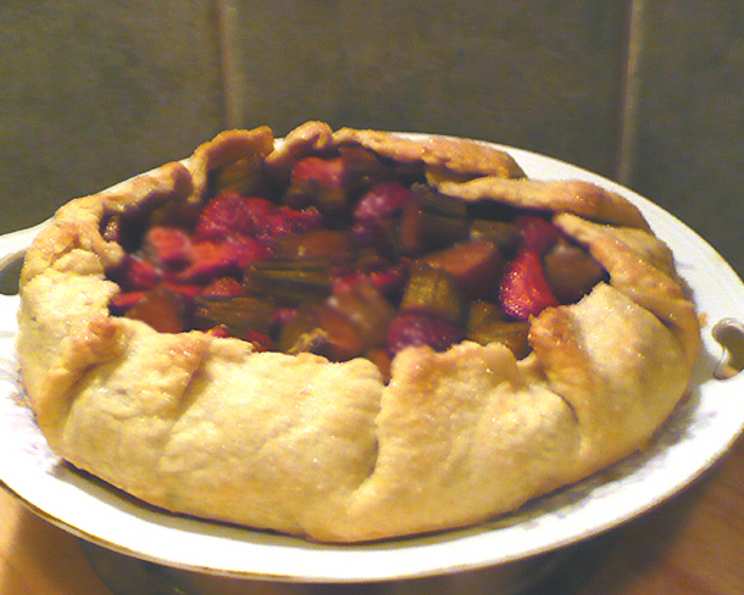
Rustic Rhubarb Tart: A Taste of Spring’s Sweet & Tart Embrace
There’s something about the arrival of rhubarb that always signals the true awakening of spring for me. It’s not just the vibrant crimson stalks appearing in the market, but the anticipation of its unique flavor – that delightful dance between bright acidity and a subtle sweetness that, when coaxed just right, becomes pure magic. I remember my grandmother, a woman who gardened with more passion than most people cook, having a patch of rhubarb that was almost as prolific as her tales. Every spring, she’d summon me to help her harvest its glorious stalks, and the first thing we’d make was invariably a tart. This recipe, a delightful find that’s become a cherished part of my repertoire, captures that same spirit of simple, honest flavor, transforming humble ingredients into something truly special.
Recipe Overview
- Prep Time: 1 hour 10 minutes (including crust chilling time)
- Cook Time: 40 to 45 minutes
- Total Time: 1 hour 50 minutes to 2 hours
- Servings: 8
- Yield: 1 (13-inch) tart
- Dietary Type: Vegetarian
Ingredients
This rustic tart celebrates the star power of rhubarb, enhanced by the sweet burst of raspberries and the subtle warmth of crystallized ginger.
For the Crust:
- 1 1/3 cups all-purpose flour
- 1 tablespoon sugar
- 1/2 teaspoon salt
- 6 tablespoons unsalted butter, cold, cut into pieces
- 3-4 tablespoons ice water
For the Filling:
- 1 lb fresh rhubarb, tops trimmed, cut into 1-inch pieces
- 1/2 cup sugar, plus an additional 2 tablespoons sugar
- 1 1/2 tablespoons cornstarch
- 3/4 teaspoon grated orange zest (divided: 1/2 teaspoon for the main filling, 1/4 teaspoon for the sugar topping)
- 6 ounces raspberries
- 1 1/2 tablespoons finely chopped crystallized ginger
- 1 tablespoon unsalted butter, cut into small pieces
Equipment Needed
- Food processor
- Plastic wrap
- Large bowl
- Baking sheet
- Parchment paper
- Rolling pin
- Spatula
- Wire rack
Instructions
Creating this rustic rhubarb tart is a rewarding process, from crafting the tender crust to assembling the vibrant filling. Take your time, embrace the imperfections, and you’ll be rewarded with a truly delicious dessert.
- Prepare the Crust: In the bowl of a food processor, combine the all-purpose flour, 1 tablespoon of sugar, and salt. Pulse a few times to ensure everything is well mixed. Add the cold, cubed unsalted butter to the processor. Pulse repeatedly until the mixture resembles coarse crumbs, with some pea-sized pieces of butter still visible. This is key to a flaky crust.
- Incorporate Water: Sprinkle 3 tablespoons of ice water over the crumbly mixture. Pulse just until the dough begins to come together. If the dough still seems dry and doesn’t quite clump when squeezed, add the remaining 1 tablespoon of ice water, pulsing once or twice more until it just starts to form a cohesive mass. Be careful not to overmix.
- Chill the Dough: Gather the dough into a ball. Gently press it into a flat disc. Wrap the disc tightly in plastic wrap. Refrigerate for at least 1 hour, or up to overnight. This chilling period is crucial for the butter to firm up, ensuring a tender and flaky crust.
- Prepare the Filling: While the dough is chilling, in a large bowl, combine the prepared rhubarb pieces, 1/2 cup of sugar, cornstarch, and 1/2 teaspoon of the grated orange zest. Toss gently to coat the rhubarb evenly. Let this mixture stand for 25 minutes, stirring occasionally. This allows the rhubarb to release some of its juices, which will help thicken the filling.
- Preheat the Oven and Prepare Baking Sheet: Position an oven rack in the center of your oven and preheat it to 425 degrees F (220 degrees C). Line a large baking sheet with parchment paper. This will catch any potential drips and make for easier cleanup.
- Roll Out the Dough: On a lightly floured surface, using a floured rolling pin, roll out the chilled dough into a rough 13-inch circle. Don’t worry about perfect edges; this is a rustic tart! If you notice any cracks forming along the edges as you roll, gently press them together.
- Transfer Dough to Baking Sheet: Carefully drape the rolled-out dough over your rolling pin. Then, gently transfer it onto the prepared baking sheet.
- Assemble the Tart: Gently stir the raspberries and finely chopped crystallized ginger into the rhubarb mixture. Spoon the filling onto the center of the dough circle, leaving a 2-inch border of dough uncovered all around.
- Form the Crust Edge: Fold the 2-inch border of dough up and over the filling, pleating the dough as you go to create a rustic, free-form edge. Press any cracks in the folded dough to seal them.
- Dot with Butter and Add Sugar Topping: Dot the top of the filling with the small pieces of unsalted butter. In a small cup, combine the remaining 2 tablespoons of sugar with the remaining 1/4 teaspoon of grated orange zest. Brush the folded dough edge lightly with water (this helps the sugar adhere). Sprinkle the sugar-zest mixture evenly over both the dough edge and the exposed filling.
- Initial Bake: Place the baking sheet with the tart into the preheated oven. Bake for 15 minutes at 425 degrees F (220 degrees C).
- Reduce Temperature and Continue Baking: After 15 minutes, reduce the oven temperature to 375 degrees F (190 degrees C). Continue to bake for an additional 25 to 30 minutes, or until the crust is beautifully golden brown and the rhubarb filling is bubbling and appears tender.
- Cool the Tart: Once baked, carefully remove the baking sheet from the oven. Let the tart cool on the pan on a wire rack for 15 minutes. This allows the filling to set slightly.
- Final Cooling: After the initial cooling period, use a spatula to carefully slide the tart off the baking sheet and onto the wire rack to cool completely. This step is important for preventing a soggy bottom crust.
Expert Tips & Tricks
- Butter Temperature is Key: For the flakiest crust, ensure your butter is thoroughly cold. If it feels too soft at room temperature, pop it back in the fridge for a few minutes before cutting and adding it to the food processor.
- Don’t Overwork the Dough: Overmixing the dough develops the gluten too much, resulting in a tough crust. Mix just until the dough comes together.
- Rhubarb Variations: If fresh rhubarb isn’t available, you can use frozen rhubarb. Thaw it completely and drain off as much excess liquid as possible before using it in the filling. You might need to slightly increase the cornstarch if the rhubarb is very watery.
- Spice it Up: If you love ginger, feel free to add a touch more crystallized ginger to the filling, or even a pinch of ground ginger for a deeper spice note.
- Crisp Crust Guarantee: Lining the baking sheet with parchment paper is a small step that can save you from a messy cleanup if your filling bubbles over. It also helps distribute heat more evenly for a crisper bottom crust.
- Visual Cues: When checking for doneness, look for a deeply golden crust and a filling that is actively bubbling. This indicates that the cornstarch has done its job and the rhubarb is tender.
Serving & Storage Suggestions
This Rustic Rhubarb Tart is best served slightly warm or at room temperature. Its vibrant flavors pair wonderfully with a dollop of fresh whipped cream, a scoop of vanilla bean ice cream, or a drizzle of crème anglaise. For a simpler presentation, a light dusting of powdered sugar can be a lovely touch.
Storage: Leftover tart can be stored, loosely covered, at room temperature for up to 2 days, provided your kitchen is not excessively warm. For longer storage, refrigerate the tart for up to 4 days. To reheat, gently warm slices in a low oven (around 300°F / 150°C) for about 10-15 minutes until warmed through.
Nutritional Information
(Please note: This is an estimated nutritional breakdown and can vary based on specific ingredients and portion sizes.)
| Nutrient | Amount per Serving | % Daily Value |
|---|---|---|
| Calories | 350 kcal | 18% |
| Total Fat | 15g | 19% |
| Saturated Fat | 9g | 45% |
| Cholesterol | 35mg | 12% |
| Sodium | 150mg | 7% |
| Total Carbohydrate | 45g | 16% |
| Dietary Fiber | 3g | 11% |
| Sugars | 25g | 50% |
| Protein | 4g | 8% |
Variations & Substitutions
- Gluten-Free Crust: For a gluten-free version, you can substitute a good quality gluten-free all-purpose flour blend for the all-purpose flour. Ensure the blend contains xanthan gum for binding.
- Dairy-Free Crust: Use a high-quality vegan butter substitute for the unsalted butter in the crust.
- Berry Blends: While raspberries are a perfect complement, feel free to experiment with other berries like strawberries, blueberries, or a mix for a different flavor profile. Adjust sweetness slightly if using less tart berries.
- Nutty Addition: For an extra textural element and subtle nutty flavor, consider adding 1/4 cup of finely chopped almonds or pecans to the filling along with the raspberries and ginger.
FAQs
Q: Why does the rhubarb need to stand for 25 minutes?
A: Allowing the rhubarb to stand with sugar and cornstarch helps it release its natural juices. This process not only softens the rhubarb slightly but also creates a syrupy consistency that contributes to a well-set and delicious filling.
Q: My dough is too dry and won’t come together, what should I do?
A: If your dough is too dry after adding the initial ice water, gradually add more ice water, one tablespoon at a time, pulsing briefly after each addition, until the dough just starts to form clumps. Be careful not to add too much, or your crust can become tough.
Q: The edges of my tart are browning too quickly, what can I do?
A: If the crust edges are browning faster than the filling is cooking, you can loosely cover the edges of the tart with strips of aluminum foil. This will shield them from direct heat and allow the center to cook through.
Q: Can I use pre-made pie crust for this recipe?
A: Yes, while a homemade crust offers superior flavor and texture, a good quality store-bought pie crust can be used as a convenient alternative. Follow the recipe’s instructions for rolling and shaping.
Q: How do I know if the rhubarb is cooked through?
A: The rhubarb is cooked through when it is tender but still holds its shape, and the juices in the tart are bubbling actively. You can gently test a piece of rhubarb with a fork to check for tenderness.
Final Thoughts
There’s a profound satisfaction that comes from baking with seasonal ingredients, and rhubarb offers such a unique and rewarding experience. This Rustic Rhubarb Tart, with its beautifully balanced sweet-tart flavor and wonderfully crisp crust, is a testament to the simple beauty of fresh produce. It’s a dessert that feels both elegant and approachable, perfect for a casual spring brunch or a more formal gathering. Pour yourself a cup of tea, perhaps a light white wine, and savor each bite of this delightful creation. I’d love to hear how yours turns out!