
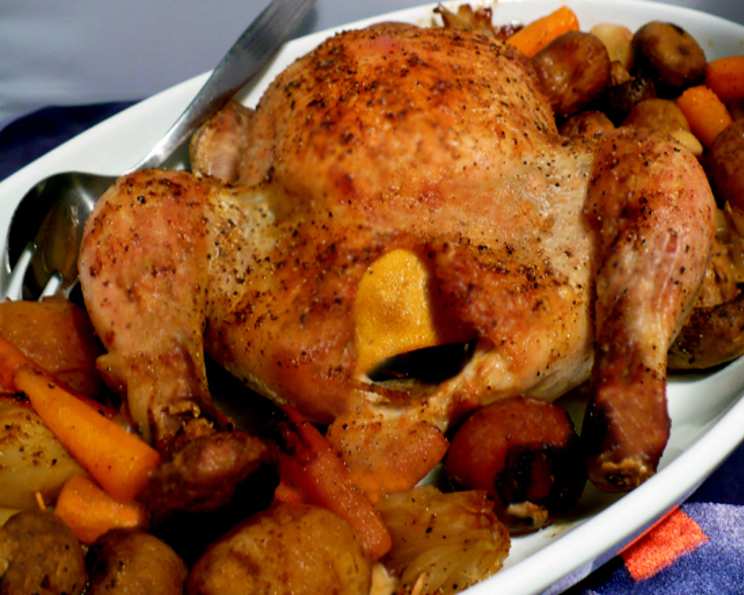
Ruth Reichl’s Humble, Glorious Roast Chicken with Potatoes & Onions
There’s a unique magic that happens in a kitchen when the aroma of roasting chicken begins to fill the air. It’s a scent that speaks of comfort, of gathered families, and of simple pleasures elevated to something truly special. For me, this particular roast chicken recipe, adapted from the inimitable Ruth Reichl, carries a whisper of late-night kitchen experiments and the satisfying hum of a perfectly cooked meal. It’s the kind of dish that reminds you that sometimes, the most profound culinary joys are found in the unpretentious, the elemental, and the deeply familiar.
Recipe Overview
- Prep Time: 15 minutes
- Cook Time: 1 hour 15 minutes to 1 hour 30 minutes
- Total Time: 1 hour 30 minutes to 1 hour 45 minutes
- Servings: 4
- Yield: 1 whole roast chicken with vegetables
- Dietary Type: Gluten-Free, Dairy-Free
Ingredients
This recipe is beautifully straightforward, relying on the quality of its few components to shine.
- 1 roasting chicken, about 3 ½ pounds (Ruth specifically mentions “farm-raised” chickens, which often have a richer flavor and firmer texture. If you can find one, embrace it! Otherwise, a good quality standard supermarket chicken will work wonderfully.)
- 1 lemon
- Olive oil
- 4 medium potatoes, peeled and each cut into 8 pieces (Ruth suggests “Yukon Gold,” but any good roasting potato like Red Bliss or fingerlings will be excellent here.)
- 1 large onion, cut into 6 pieces
- 3-4 garlic cloves, unpeeled
- Salt and black pepper to taste
Equipment Needed
You won’t need a brigade of specialized tools for this recipe. A few essentials will do the trick:
- Oven
- Roasting pan (large enough to comfortably hold the chicken and vegetables without crowding)
- A small bowl for tossing vegetables
- A fork
- Optional: A roasting rack
Instructions
The beauty of this recipe lies in its deceptive simplicity and Ruth Reichl’s intuitive approach to coaxing incredible flavor from basic ingredients.
-
Preheat Your Oven: Begin by preheating your oven to 400°F (200°C). Ensuring your oven is at the correct temperature before the chicken goes in is crucial for even cooking and a beautifully browned skin.
-
Prepare the Chicken for Self-Basting: This is a clever step that allows the chicken to baste itself as it roasts, keeping the breast meat wonderfully moist. Very gently, run your fingers between the breast skin and the meat, starting from the neck opening, on both sides of the breast. The goal is to loosen the skin, creating a pocket for the fat. Be careful not to puncture or tear the skin.
-
Distribute the Fat: Now, take any excess fat you might have around the chicken (often found near the cavity or tail) and chop it into small pieces. Gently tuck this chopped fat underneath the loosened breast skin, distributing it as evenly as possible. This fat will melt and render during roasting, basting the breast meat from the inside out.
-
Prepare the Lemon: Take your lemon and, using a fork, puncture it all over. This will allow its juices to mingle with the chicken as it cooks. Place the punctured lemon inside the cavity of the chicken.
-
Toss the Vegetables: In a separate bowl, combine the cut potatoes, onion pieces, and unpeeled garlic cloves. Drizzle generously with olive oil, tossing until each piece is lightly coated.
-
Season the Chicken: Season the chicken all over with salt and pepper. Now, I understand Ruth’s point about not making a “big to-do” about roasting a chicken, but if you’re not using a superior, genuinely “farm-raised” bird, supermarket chickens can sometimes lack inherent flavor. This is where I personally like to elevate the seasoning. I’ll use a good quality seasoning salt blend and freshly cracked black pepper, ensuring the chicken is well-seasoned all over, inside and out, paying particular attention to the cavity before placing the lemon inside.
-
Arrange the Vegetables: Scatter the oil-coated vegetables into your roasting pan, spreading them out in a single layer. Season these vegetables with salt and pepper as well.
-
Position the Chicken: If you have a roasting rack, place it over the vegetables in the pan, then put the chicken on top of the rack. Jiggle things around slightly if needed to ensure the chicken fits comfortably above the vegetables. If you don’t have a rack, simply place the chicken directly into the pan, nestled amongst or on top of the vegetables.
-
Roast to Perfection: Place the roasting pan into your preheated oven. Roast for approximately 1 hour and 15 minutes. Ruth suggests about an hour, but in my experience, a chicken of this size benefits from a bit more time to ensure it’s fully cooked and gloriously tender, so I often extend this to 1 hour and 30 minutes.
-
Resting is Crucial: Once the chicken is cooked through (you can check by piercing the thickest part of the thigh; the juices should run clear), carefully remove the pan from the oven. Let the chicken rest for about 10 minutes. This resting period is vital as it allows the juices to redistribute throughout the meat, resulting in a more succulent and tender bird. If you plan to carve it immediately, I’d suggest placing it into a very low warming oven (around 200°F/95°C) during this resting time to keep it piping hot.
-
Serve with Flair: Carve the chicken into serving pieces. Arrange the tender, roasted potatoes, onion, and garlic around the chicken on a serving platter. Carefully squeeze the juices from the now-baked, soft lemon over the chicken and vegetables before presenting it at the table.
Expert Tips & Tricks
- The Perfect Sear: For an even crispier skin, you can increase the oven temperature to 425°F (220°C) for the last 10-15 minutes of roasting, keeping a close eye to prevent burning.
- Vegetable Variety: Feel free to add other root vegetables like carrots or parsnips to the roasting pan along with the potatoes and onions. Ensure they are cut into similarly sized pieces for even cooking.
- Herbaceous Notes: Tuck a few sprigs of fresh rosemary or thyme into the cavity of the chicken along with the lemon for an extra layer of aromatic flavor.
- Garlic Power: The unpeeled garlic cloves will roast into sweet, creamy morsels that are wonderfully spreadable on the roasted potatoes or even on crusty bread.
Serving & Storage Suggestions
This roast chicken is a complete meal in itself, perfect for a family dinner or a casual gathering. Serve the carved chicken with generous portions of the roasted vegetables. The baked lemon, when squeezed, adds a delightful tang to everything.
Leftovers can be stored in an airtight container in the refrigerator for up to 3-4 days. To reheat, gently warm the chicken and vegetables in a moderate oven (around 300°F/150°C) until heated through. Avoid microwaving if possible, as it can toughen the chicken meat.
Nutritional Information
Please note: This is an approximate nutritional breakdown and can vary based on the specific size and fat content of the chicken and the exact quantities of oil used.
| Nutrient | Amount per Serving (approx.) | % Daily Value |
|---|---|---|
| Calories | 736.3 kcal | |
| Total Fat | 40.9 g | 62% |
| Saturated Fat | 11.7 g | 58% |
| Cholesterol | 187.2 mg | 62% |
| Sodium | 188.9 mg | 7% |
| Total Carbohydrate | 41.9 g | 13% |
| Dietary Fiber | 5.6 g | 22% |
| Sugars | 3.2 g | 12% |
| Protein | 48.9 g | 97% |
Variations & Substitutions
- Citrus Swap: Instead of a lemon, try using an orange or even a few sprigs of fresh thyme inside the cavity for a slightly different aromatic profile.
- Herbal Infusion: Rub the chicken with a compound butter made from softened butter, minced garlic, and finely chopped herbs like rosemary, thyme, or parsley before tucking it under the skin for an extra boost of flavor.
- Root Vegetable Medley: Feel free to experiment with other roasting vegetables like sweet potatoes, parsnips, or even chunks of butternut squash.
FAQs
Q: Why does Ruth Reichl suggest loosening the skin and tucking fat underneath?
A: This technique allows the fat to melt and baste the breast meat from the inside as the chicken roasts, preventing it from drying out and keeping it incredibly moist and flavorful.
Q: Can I use a smaller or larger chicken?
A: Yes, but you will need to adjust the roasting time accordingly. A general guideline is about 15-20 minutes per pound at 400°F (200°C), but always use a meat thermometer to ensure it’s cooked to an internal temperature of 165°F (74°C) in the thickest part of the thigh.
Q: My chicken skin isn’t very crispy. What can I do?
A: Ensure the chicken is very dry before seasoning (pat it thoroughly with paper towels). You can also increase the oven temperature for the last 10-15 minutes of cooking, as mentioned in the tips.
Q: Can I make this ahead of time?
A: While roasting the chicken is best done fresh, you can prepare the vegetables by cutting and tossing them with olive oil, salt, and pepper a few hours in advance and keeping them covered in the refrigerator.
Q: What’s the best way to tell if the chicken is cooked through?
A: The most reliable method is to use an instant-read meat thermometer inserted into the thickest part of the thigh, avoiding the bone. It should register 165°F (74°C). Alternatively, pierce the thigh with a skewer or knife; the juices should run clear, not pink.
Final Thoughts
Ruth Reichl’s Roast Chicken with Potatoes & Onions is more than just a recipe; it’s an invitation to embrace the simple elegance of a well-cooked meal. It’s the kind of dish that proves that with a little care and attention to fundamental techniques, even the most familiar ingredients can yield extraordinary results. So, gather your ingredients, preheat your oven, and let the comforting aroma fill your home. This chicken promises not just a delicious meal, but a moment of genuine culinary satisfaction. Serve it with a crisp green salad and a glass of your favorite white wine for a truly perfect evening.