
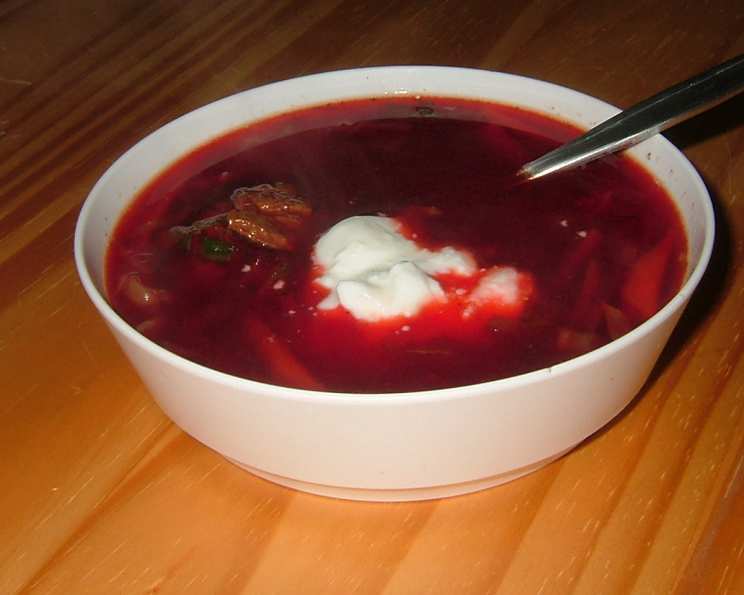
Ukrainian Standard Borsch: A Hug in a Bowl
The scent of simmering broth, the earthy sweetness of beets, and the bright tang of dill—these are the aromas that transport me back to my grandmother’s kitchen. Growing up, borsch wasn’t just a soup; it was an event, a weekly ritual that brought the family together. I remember watching her, a culinary artist in her own right, meticulously preparing the ingredients, her hands moving with a practiced grace. The deep ruby hue of the borsch was mesmerizing, promising a meal that was both nourishing and deeply comforting. It’s a dish that embodies the warmth and resilience of Ukrainian culture, a taste of home that I carry with me wherever I go.
Recipe Overview
- Prep Time: 45 minutes
- Cook Time: 2 hours 10 minutes
- Total Time: 2 hours 55 minutes
- Servings: 8
- Yield: Approximately 12 cups
- Dietary Type: Can be adapted for Vegetarian/Vegan (omit meat and dairy)
Ingredients
- 1 ½ lbs soup meat, with bone (such as beef shank or brisket)
- 10-12 cups cold water
- 1 teaspoon salt
- 1 medium onion, chopped
- 2 medium beets, cut in thin strips
- 1 small carrot, cut in thin strips
- 1 medium potato, diced
- ½ cup thinly sliced celery
- ½ cup diced string beans or ½ cup cooked white beans
- 2-3 cups shredded cabbage
- ¾ cup strained tomatoes or ¾ cup tomato juice
- ½ garlic clove, crushed (optional)
- 1 tablespoon flour
- Beet kvas or lemon juice
- Salt and pepper to taste
- Chopped fresh dill
- ½ cup sour cream (for serving)
Equipment Needed
- Large stockpot or Dutch oven
- Sharp knife and cutting board
- Measuring cups and spoons
- Small bowl for slurry
- Ladle
Instructions
- Begin by preparing the foundational broth. Place the soup meat in a large stockpot or Dutch oven. Cover it with 10-12 cups of cold water. Add 1 teaspoon of salt to the water.
- Bring the pot slowly to a boiling point over medium-high heat. As it heats, impurities will rise to the surface. Skim off this foam diligently with a spoon to ensure a clear and flavorful broth.
- Once skimmed, cover the pot and simmer the meat for 1 hour and 30 minutes. This slow cooking process is crucial for extracting the maximum flavor from the meat and creating a rich base for the borsch.
- After the initial simmering period, add the chopped onion and the thinly stripped beets to the pot. Continue to cook for 10 to 15 minutes, or until the beets are almost tender. If you are using very young, tender beets, you can add them at this stage along with the other root vegetables.
- Next, introduce the carrot, potato, celery, and string beans to the simmering soup. Continue cooking for approximately 10 more minutes.
- If you are opting to use cooked white beans, it’s best to add them after the cabbage has cooked. This helps them retain their appealing white color and prevents them from becoming mushy.
- Finally, add the shredded cabbage to the pot. Cook until the cabbage is tender but still retains a slight bite. It’s important not to overcook the cabbage, as it can lose its vibrant color and pleasant texture.
- Stir in the strained tomatoes (or tomato juice) and the optional crushed garlic clove. Allow these to meld with the other flavors.
- To thicken the borsch, prepare a slurry. In a small bowl, blend the 1 tablespoon of flour with 3 tablespoons of cold water. Gradually spoon some of the hot soup liquid into the flour mixture, stirring continuously until smooth. Then, stir this slurry into the borsch. If you prefer a thinner borsch, you can omit the flour entirely.
- Introduce a touch of acidity to balance the flavors. Add a small quantity of beet kvas or lemon juice. Be judicious with this addition; a good borsch should have a pleasant tartness, not an overpowering sourness.
- Season the borsch to your preference with salt and pepper. Bring the soup back to a gentle boiling point.
- Just before serving, stir in the freshly chopped dill. This adds a burst of fresh aroma and flavor that is characteristic of authentic borsch.
- When the borsch is ready to be served, ladle it into bowls. Add a generous dollop of thick sour cream to each serving. The amount of cream is a matter of personal preference, and some choose to omit it altogether. In central Ukraine, it’s customary to add the cream directly into each individual serving.
- If you plan to reheat your borsch on a subsequent day, do not add the cream during the initial cooking or storage. Borsch generally tastes even better when reheated the next day, and the cream should be added just before serving to maintain its texture and freshness.
Expert Tips & Tricks
- Broth is Key: The quality of your broth dictates the flavor of your borsch. Using a piece of soup meat with bone is essential for creating a deep, rich stock. You can enhance the broth further by adding a piece of smoked pork alongside the beef; each contributes a unique depth of flavor.
- Beet Preparation: My grandmother’s preference for thinly sliced beets is a classic technique that ensures they cook evenly and contribute their beautiful color throughout the soup. However, for a quicker approach without sacrificing quality, grating the beets on a coarse grater works wonderfully.
- Flavor Balancing: The addition of beet kvas or lemon juice is critical for achieving that signature borsch tang. Start with a small amount and taste as you go. You’re aiming for a pleasant tartness that cuts through the richness of the soup.
- Bean Choice: If using canned white beans, drain and rinse them thoroughly before adding. Adding them towards the end of cooking preserves their shape and prevents them from making the broth cloudy.
- Freshness Factor: Don’t skimp on the fresh dill. It’s a vital aromatic component that brightens the entire dish. Add it right at the end to preserve its vibrant flavor.
Serving & Storage Suggestions
Borsch is a hearty, complete meal in itself, but it’s traditionally served with a side of dark rye bread or pampushky (garlic rolls). For an authentic experience, ladle the steaming borsch into deep bowls, swirl in a generous dollop of sour cream, and sprinkle with fresh dill.
Leftovers can be stored in an airtight container in the refrigerator for up to 3-4 days. When reheating, gently warm the borsch on the stovetop or in the microwave. Crucially, do not add the sour cream until just before serving when reheating, as it can curdle if heated too aggressively or for too long. Borsch often tastes even better the day after it’s made, as the flavors have had more time to meld.
Nutritional Information
| Nutrient | Amount per Serving (approximate) | % Daily Value |
|---|---|---|
| Calories | 250 kcal | 13% |
| Total Fat | 12g | 15% |
| Saturated Fat | 5g | 25% |
| Cholesterol | 40mg | 13% |
| Sodium | 500mg | 22% |
| Total Carbohydrate | 20g | 7% |
| Dietary Fiber | 4g | 14% |
| Sugars | 8g | 16% |
| Protein | 15g | 30% |
Note: Nutritional values are estimates and can vary based on specific ingredients and portion sizes. This information does not include the sour cream addition.
Variations & Substitutions
- Vegetarian/Vegan Borsch: To create a delicious vegetarian or vegan version, simply omit the soup meat and use a rich vegetable broth as your base. For the creaminess, use a plant-based sour cream alternative or a swirl of unsweetened cashew cream.
- Smoky Flavor: For an extra layer of smoky depth, consider adding a small piece of smoked bacon or kielbasa along with the fresh pork and beef. Remember to remove it before serving if you prefer a less intensely smoky flavor.
- Bean Variety: While string beans and white beans are traditional, feel free to experiment with other legumes like kidney beans or lentils for added texture and protein.
- Acidity Boost: If you don’t have beet kvas or find lemon juice too sharp, a splash of apple cider vinegar can also provide a pleasant tang.
FAQs
Q: What is the role of beet kvas in borsch?
A: Beet kvas is a fermented beet drink that adds a unique, slightly sour, and earthy flavor to borsch, contributing to its signature tanginess.
Q: Can I use pre-cooked beets for borsch?
A: While fresh beets provide the best flavor and color, you can use pre-cooked or vacuum-sealed beets in a pinch. Grate them and add them during the last 30 minutes of simmering.
Q: My borsch color isn’t as vibrant as I’d hoped. What can I do?
A: Ensure you’re adding the beets early enough and not overcooking them. Also, be mindful of adding too much tomato juice or other acidic ingredients too early, as they can dull the beet’s color.
Q: How can I make borsch thicker without using flour?
A: You can achieve a thicker borsch by simmering it uncovered for a bit longer to allow some of the liquid to evaporate, or by mashing some of the cooked potato against the side of the pot to release its starch.
Q: Is it traditional to add other vegetables to borsch?
A: While this recipe represents a standard version, variations are common. Some recipes include parsnips, bell peppers, or tomatoes other than juice or strained.
Final Thoughts
This Ukrainian Standard Borsch is more than just a recipe; it’s a culinary heirloom, a testament to the enduring flavors of Ukrainian heritage. It’s a dish that warms you from the inside out, a comforting embrace in a bowl. I encourage you to gather your ingredients, take your time, and savor the process of creating this magnificent soup. Share it with loved ones, and let the rich history and deliciousness of borsch create its own cherished memories around your table. Enjoy every spoonful.