
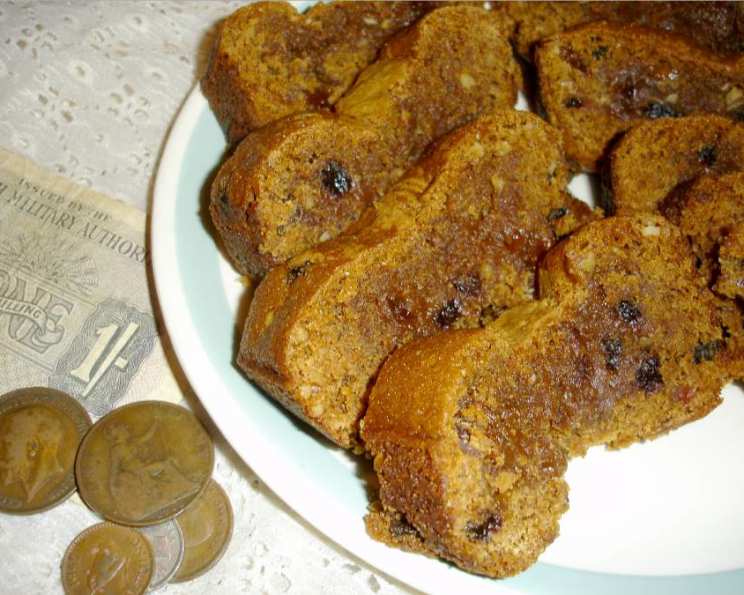
War Cake: A Taste of Resilience and Sweet Simplicity
My mother, a woman whose hands always seemed to hum with the quiet magic of the kitchen, would often speak of baking during “the war.” It wasn’t a time of scarcity for us, not directly, but the echoes of those lean years were a constant reminder in the recipes she cherished. War Cake, in particular, held a special place. It was born of necessity, a testament to making something truly delightful from ingredients that were readily available and perhaps less luxurious. The aroma of it baking – a warm, spiced hug that filled our home, especially around the holidays – always felt like a comforting embrace, a sweet reminder that even in challenging times, joy could be found in a simple, honest cake.
Recipe Overview
- Prep Time: 20 minutes
- Cook Time: 45 minutes
- Total Time: 1 hour 5 minutes
- Servings: 12
- Yields: 2 loaves
- Dietary Type: Vegetarian
Ingredients
This War Cake recipe is a beautiful example of resourceful baking, using common pantry staples to create something incredibly moist and flavorful.
- 2 cups brown sugar
- 1 cup water
- 1 cup raisins
- 1/4 cup vegetable shortening
- 1 teaspoon cinnamon
- 1/4 teaspoon nutmeg
- 1/4 teaspoon ground cloves
- 3 cups all-purpose flour
- 1/4 teaspoon salt
- 1 teaspoon baking powder
- 1 teaspoon baking soda
- 1/2 cup chopped walnuts (optional)
Equipment Needed
To bring this classic War Cake to life, you’ll want to gather a few essential kitchen tools:
- A medium-sized, heavy-bottomed saucepan (this helps prevent scorching)
- Measuring cups and spoons
- A whisk or spoon for stirring
- A sifter (or a fine-mesh sieve)
- Two 9×5-inch loaf pans
- Parchment paper (optional, for lining pans)
- A wire cooling rack
Instructions
The beauty of War Cake lies in its straightforward method, a testament to simplicity that belies its delicious outcome.
- Begin by combining the brown sugar, water, raisins, vegetable shortening, cinnamon, nutmeg, and ground cloves in a heavy-gauge saucepan.
- Place the saucepan over medium heat and bring the mixture to a boil.
- Once boiling, reduce the heat to low and simmer gently for 5 minutes, stirring occasionally. This allows the flavors to meld and the raisins to soften.
- Remove the saucepan from the heat. It’s crucial to let this mixture cool until it is comfortably cool to the touch. You should be able to comfortably dip your finger in without burning yourself. This step is important for activating the leavening agents later.
- While the sugar mixture is cooling, preheat your oven to 350 degrees F (175 degrees C).
- Grease and flour your two 9×5-inch loaf pans. For extra insurance against sticking, you can line the bottoms with parchment paper after greasing.
- In a separate medium bowl, sift together the all-purpose flour, salt, baking powder, and baking soda. Sifting ensures these dry ingredients are well-aerated and evenly distributed, which is key for a tender crumb.
- Once the sugar mixture is comfortably cool, add the sifted dry ingredients to the cooled sugar mixture.
- Beat the batter well until it is smooth and well-combined. You don’t need to overmix; just ensure there are no dry pockets of flour.
- If you are using them, stir in the chopped walnuts at this stage.
- Divide the batter evenly between the two prepared loaf pans.
- Bake for 45 minutes, or until a toothpick inserted into the center of the loaves comes out clean. Baking times can vary slightly depending on your oven, so the toothpick test is your most reliable indicator of doneness.
- Once baked, remove the cakes from the oven and cool in the pans for 10 minutes. This brief resting period allows the cakes to firm up slightly, making them easier to handle.
- After 10 minutes, turn the cakes out onto a wire cooling rack and cool completely. Ensuring they are fully cooled before slicing will prevent them from crumbling.
Expert Tips & Tricks
As a chef, I always appreciate how resourceful recipes like War Cake can be elevated with a few thoughtful touches. While its charm is in its simplicity, here are a few ways to enhance your War Cake experience:
- Raisin Rehydration: For plumper, juicier raisins, you can soak them in a tablespoon of warm water or even a splash of dark rum for about 15-20 minutes before adding them to the boiling mixture. Drain any excess liquid before adding.
- Spice It Up: While the classic spice blend is delightful, feel free to experiment. A pinch of ground ginger or a touch of allspice can add another layer of warmth and complexity.
- Citrus Zest: A teaspoon or two of orange or lemon zest added with the dry ingredients can provide a bright, unexpected lift that beautifully complements the warm spices.
- Checking for Doneness: Ovens can be fickle! If your cakes are browning too quickly on top but not cooked through, you can loosely tent them with aluminum foil for the last 15-20 minutes of baking.
- Cooling Rack Importance: Don’t skip the wire cooling rack! Allowing air to circulate around the bottom of the cake prevents the crust from becoming soggy, ensuring an even texture.
Serving & Storage Suggestions
War Cake is wonderfully versatile. It’s delicious served simply on its own, allowing its natural sweetness and spice to shine. It also pairs beautifully with a light dusting of powdered sugar, a dollop of whipped cream, or even a simple glaze made from powdered sugar and milk.
For storage, this cake is quite forgiving. Once completely cooled, it can be stored in an airtight container at room temperature for up to 3 days. If you live in a warmer climate or prefer your cake chilled, it will keep well in the refrigerator for up to a week. To refresh, you can gently warm slices in a toaster oven or a low oven for a few minutes. For longer storage, War Cake freezes exceptionally well. Wrap cooled loaves tightly in plastic wrap, then in aluminum foil, and freeze for up to 3 months. Thaw at room temperature before serving.
Nutritional Information
Here’s an estimated nutritional breakdown for a serving of War Cake. Please note that these values can vary based on specific ingredient brands and exact measurements.
| Nutrient | Amount per Serving | % Daily Value |
|---|---|---|
| Calories | 350 kcal | 18% |
| Total Fat | 15g | 23% |
| Saturated Fat | 4g | 20% |
| Cholesterol | 0mg | 0% |
| Sodium | 600mg | 26% |
| Total Carbohydrate | 50g | 18% |
| Dietary Fiber | 2g | 8% |
| Sugars | 30g | 60% |
| Protein | 3g | 6% |
Percentage Daily Values are based on a 2,000 calorie diet. Your daily values may be higher or lower depending on your calorie needs.
Variations & Substitutions
While the classic recipe is beloved, there’s always room for creativity.
- Nut-Free Version: Simply omit the walnuts. The cake will still be wonderfully moist and flavorful.
- Gluten-Free: This can be a bit trickier due to the cake’s moisture from the sugar syrup. A good starting point would be to use a 1:1 gluten-free flour blend, though you might find the texture slightly denser.
- Dried Fruit Medley: Beyond raisins, consider adding dried cranberries, chopped dates, or even dried cherries for a different fruity profile.
FAQs
Q: Why is this cake called “War Cake”?
A: This cake earned its name because it was developed during times of ingredient shortages and rationing, utilizing readily available pantry staples to create a delicious treat.
Q: Can I use butter instead of vegetable shortening?
A: While vegetable shortening contributes to the cake’s signature moisture and tender crumb, you could substitute it with melted butter. However, the texture might be slightly different.
Q: How do I know if my cake is baked through?
A: The most reliable method is the toothpick test. Insert a wooden toothpick into the center of the cake; if it comes out clean with no wet batter attached, the cake is done.
Q: Can I add frosting to this cake?
A: Absolutely! While traditionally enjoyed plain or with a simple dusting, War Cake is a fantastic base for a variety of frostings, from cream cheese to buttercream.
Q: Why do I need to cool the sugar mixture before adding flour?
A: Cooling the sugar mixture to a comfortably warm temperature is essential for the baking soda and baking powder to react properly, providing the cake with its lift and airy texture. Adding them to a very hot mixture can deactivate the leavening agents.
Final Thoughts
The humble War Cake is more than just a recipe; it’s a piece of culinary history, a testament to ingenuity and the enduring power of comfort food. It reminds us that deliciousness doesn’t always require extravagance, and that sometimes, the simplest ingredients can yield the most profound flavors. I encourage you to bake this cake, to share it with loved ones, and to savor each moist, spiced bite. It’s a taste of resilience, a warm hug from the past, and a delightful treat for any occasion. Enjoy it with a cup of tea or coffee, or perhaps a glass of milk for a touch of pure, unadulterated comfort.