
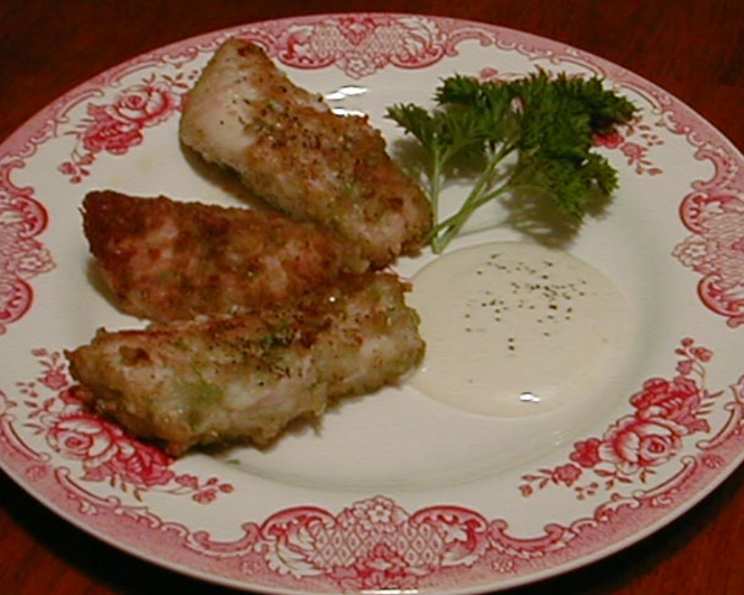
Wasabi Chicken Fingers: A Fiery Twist on a Classic
There’s something undeniably comforting about a well-made chicken finger – that satisfying crunch, the tender interior, and the simple joy of dipping. But as a chef constantly seeking to push boundaries and awaken the palate, I often find myself gravitating towards flavors that offer a bit more… intrigue. My first encounter with this particular iteration was during a lively culinary exploration of Asian-inspired appetizers. I was experimenting with the intensely pungent and delightfully spicy wasabi peas, a snack I’d always adored for its sinus-clearing kick. The idea of transforming these little green powerhouses into a crunchy coating for chicken was an immediate spark of inspiration, promising an appetizer that was both familiar and exhilaratingly new.
Recipe Overview
- Prep Time: 15 minutes
- Cook Time: 28 minutes (This is the sum of the skillet frying time and oven baking time)
- Total Time: 43 minutes
- Servings: 4
- Yield: 20 fingers (approximately)
- Dietary Type: Not specified
Ingredients
- 1 cup wasabi peas
- 4 boneless, skinless chicken breasts
- 2 tablespoons olive oil
- Salt and freshly ground black pepper to taste
Equipment Needed
- Food processor or mini-chop
- Large skillet
- Baking sheet (optional, but helpful for transferring)
- Tongs
- Oven
Instructions
-
Preheat the Oven: Begin by preheating your oven to 400 degrees Fahrenheit (200 degrees Celsius). This ensures the oven is at the optimal temperature to finish cooking the chicken evenly.
-
Prepare the Wasabi Coating: Take your 1 cup of wasabi peas and place them into a food processor or mini-chop. Pulse and grind them until they form a coarse powder or fine crumbs. You want a consistency that will adhere well to the chicken but still provide a distinct crunch.
-
Prepare the Chicken: Take your 4 boneless, skinless chicken breasts. Lightly brush them on all sides with about 1 tablespoon of the olive oil. This will help the wasabi pea coating adhere and also prevent the chicken from sticking.
-
Cut the Chicken: Using a sharp knife, carefully cut each chicken breast into 5 diagonal fingers. Aim for pieces that are roughly uniform in size and thickness to ensure even cooking. You should end up with approximately 20 chicken fingers.
-
Coat the Chicken: Now comes the fun part! Take each chicken finger and generously roll it in the wasabi pea mixture you prepared. Ensure each piece is thoroughly coated, pressing gently to help the crumbs adhere.
-
Season the Fingers: Once coated, place the chicken fingers on a plate or clean surface. Season them with salt and freshly ground black pepper to your liking. Remember that the wasabi peas already have a distinct flavor, so season judiciously.
-
Sear the Chicken: Heat the remaining 1 tablespoon of olive oil in a large skillet over medium-high heat. Once the oil is shimmering and hot, carefully add the coated chicken fingers to the skillet. Fry them until they are colored on each side, which should take about 2 minutes per side. This searing step is crucial for developing a beautiful golden-brown exterior and adding another layer of texture.
-
Finish in the Oven: After searing, if your skillet is oven-safe, carefully transfer the skillet to the preheated oven. If not, arrange the seared chicken fingers on a baking sheet and place that in the oven. Bake for 5 to 8 minutes, or until the chicken is cooked through and no longer pink in the center. The exact time will depend on the thickness of your chicken breasts.
-
Serve: Remove the chicken fingers from the oven. Serve them either hot or cold, perhaps with your favorite dipping sauce.
Expert Tips & Tricks
The beauty of this recipe lies in its simplicity, but a few chef-driven touches can elevate it further. When grinding the wasabi peas, don’t over-process them into a fine dust; a little texture is desirable for that satisfying crunch. If you find your wasabi peas are a bit stale, a quick toast in a dry pan for a minute can revive their flavor and aroma. For an even crispier coating, you could lightly dredge the chicken fingers in a bit of flour (or a gluten-free alternative) before coating them in the wasabi pea mixture. This creates an extra layer for the crumbs to cling to. When searing, ensure your pan is hot enough so the chicken gets a good color quickly without overcooking.
Serving & Storage Suggestions
These wasabi chicken fingers are incredibly versatile. They make a sensational appetizer for parties, a fun main course for a casual weeknight dinner, or even a flavorful addition to a bento box. For serving hot, they are best enjoyed immediately after coming out of the oven. They pair wonderfully with a creamy, cooling dip like wasabi mayonnaise, ranch dressing, or a simple sweet chili sauce to balance the heat. For a more traditional Japanese flair, consider serving them alongside some sushi rice and a light salad.
Leftovers can be stored in an airtight container in the refrigerator for up to 2-3 days. They are delicious served cold, making them a great option for lunches. To reheat, a few minutes in a 350-degree Fahrenheit (175-degree Celsius) oven or an air fryer will help restore some of their original crispiness. Avoid reheating in the microwave, as this tends to make the coating soggy.
Nutritional Information
| Nutrient | Amount per Serving | % Daily Value |
|---|---|---|
| Calories | 223.1 kcal | N/A |
| Calories from Fat | N/A | 74% |
| Total Fat | 8.3 g | 12% |
| Saturated Fat | 1.3 g | 6% |
| Cholesterol | 68.4 mg | 22% |
| Sodium | 78 mg | 3% |
| Total Carbohydrate | 6.3 g | 2% |
| Dietary Fiber | 2.2 g | 8% |
| Sugars | 2.4 g | 9% |
| Protein | 29.4 g | 58% |
Note: Nutritional values are estimates and can vary based on specific ingredients and preparation methods.
Variations & Substitutions
While the classic wasabi pea crust is stellar, feel free to get creative! For a gluten-free option, ensure your wasabi peas are certified gluten-free and consider using a gluten-free flour for dredging. If you don’t have wasabi peas, you could try using crushed wasabi crackers or a mixture of panko breadcrumbs with a teaspoon of wasabi paste. For a milder flavor, use less wasabi peas or a milder variety if available. You could also experiment with adding a pinch of garlic powder or onion powder to the wasabi pea mixture for an extra savory note.
FAQs
Q: Can I bake these chicken fingers instead of frying them?
A: Yes, while the recipe includes a sear in a skillet, you can skip the searing and bake them directly in the oven. For best results, preheat your oven to 400 degrees Fahrenheit (200 degrees Celsius) and bake for approximately 20-25 minutes, flipping halfway through, until cooked through and golden.
Q: How can I make the wasabi flavor more intense?
A: For a more potent wasabi kick, you can increase the amount of wasabi peas used or pulse them into a finer powder. You could also add a touch of wasabi paste to your dipping sauce.
Q: Are these chicken fingers spicy?
A: The spiciness comes from the wasabi peas. The level of heat can vary depending on the brand of wasabi peas. If you are sensitive to spice, you might want to use half the amount of wasabi peas or opt for a milder snack to crush.
Q: What is the best way to serve these if I’m making them for a crowd?
A: For a crowd, you can prepare them in batches, keeping the first batch warm in a low oven while you cook the second. Arrange them attractively on a platter with various dipping sauces for guests to choose from.
Q: Can I use chicken thighs instead of breasts?
A: Absolutely! Chicken thighs will offer a richer, more moist result. They may require a slightly longer cooking time in the oven to ensure they are fully cooked through.
Final Thoughts
These Wasabi Chicken Fingers are more than just a recipe; they’re an invitation to explore a delightful intersection of textures and flavors. They offer that comforting crunch we all love, elevated by the unexpected zing of wasabi, creating a dish that is both familiar and excitingly new. Whether you’re serving them as a conversation-starting appetizer or a simple yet satisfying meal, I encourage you to give them a try. The subtle heat and vibrant flavor are truly addictive, and I have no doubt they will become a go-to in your culinary repertoire. Enjoy the delightful kick!