
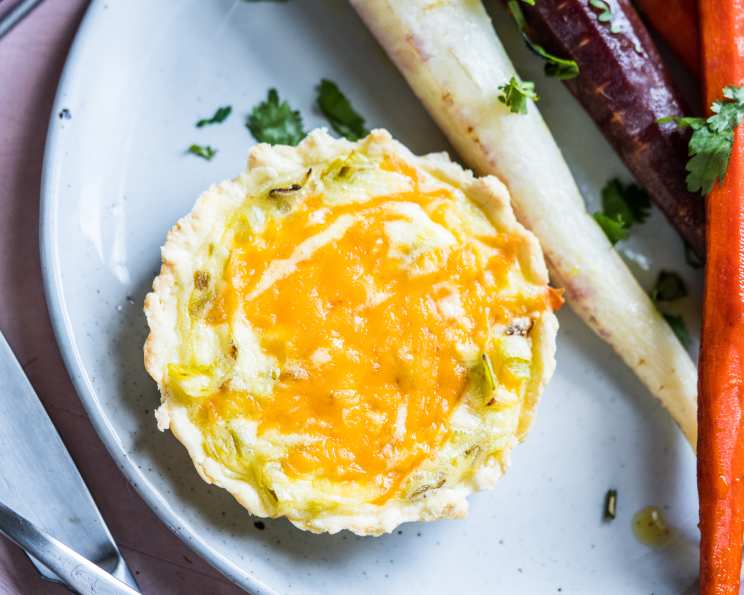
Wicklewood’s Individual Cheese and Leek Tartlets: A Gluten-Free Revelation
There’s a certain magic that happens when humble ingredients come together to create something truly special. For me, that magic often conjures memories of crisp autumn afternoons spent in my grandmother’s kitchen. The air would be thick with the comforting aroma of baking, a prelude to the delightful treats she’d expertly craft. Among her repertoire, these individual cheese and leek tartlets always held a special place. The flaky, buttery crust encasing a savory, melt-in-your-mouth filling was pure bliss. Even now, the thought of those golden-brown edges and the gentle perfume of leeks and cheese transports me back to those cherished moments, a testament to the power of simple, honest cooking.
Recipe Overview
- Prep Time: 45 minutes
- Cook Time: 25 minutes
- Total Time: 1 hour 10 minutes (including chilling time)
- Servings: 4
- Yield: 4 individual tartlets
- Dietary Type: Gluten-Free
Ingredients
For the Pastry:
- 6 ounces gluten-free flour mix
- 1 ounce butter, cold and cubed
- 1 ounce lard, cold and cubed
- 1 egg
- 1-2 tablespoons cold water
- 1/4 teaspoon salt
- 1/4 teaspoon xanthan gum
For the Filling:
- 1 ounce butter
- 1 teaspoon English mustard (or Dijon mustard if gluten-free English mustard is unavailable)
- 1 onion, thinly sliced
- 1 teaspoon dried thyme
- 1 lb leek, thinly sliced
- 3 ounces medium cheddar, grated
- 3 eggs
- 1/2 pint single cream
- Seasoning (salt and freshly ground black pepper)
Equipment Needed
- 6-inch (approx.) mixing bowls
- Pastry blender or fingertips
- Cling film
- Rolling pin
- 6 x 4-inch tartlet tins
- 5-inch round cutter
- Parchment paper
- Baking beans or pie weights
- Fork
- Small frying pan
- Large mixing bowl
- Whisk
Instructions
Let’s embark on creating these delightful tartlets. We’ll start by crafting the gluten-free pastry, which requires a little finesse due to its crumbly nature, and then move on to the flavourful leek and cheese filling.
Crafting the Gluten-Free Pastry:
- Begin by sifting the gluten-free flour mix, xanthan gum, and salt into a medium-sized mixing bowl. This ensures an even distribution of the ingredients and helps aerate the flour, which is crucial for a tender crust.
- Next, add the cold, cubed butter and lard to the bowl. Using a pastry blender or your fingertips, rub the fats into the flour mixture until it resembles fine breadcrumbs. The key here is to work quickly to prevent the fats from melting, which is essential for achieving a flaky texture.
- In a separate small bowl, whisk the egg. Then, add the beaten egg to the flour and fat mixture. Begin to bring the dough together, gradually adding cold water, one tablespoon at a time, until a cohesive dough forms. Be mindful not to overwork the dough. If it seems too wet, you can compensate by adding a touch more flour mix.
- Once the dough has come together, wrap it tightly in cling film. Chill the dough in the refrigerator for 30 minutes. This resting period allows the gluten-free flours to hydrate and the fats to firm up, making the dough easier to handle.
Preparing the Tartlet Shells:
- While the pastry is chilling, preheat your oven to 190°C (375°F).
- Grease and lightly flour your 6 x 4-inch tartlet tins.
- On a lightly floured surface, roll out the chilled pastry dough to approximately 1/8 inch thickness.
- Using a 5-inch round cutter, cut out 6 rounds of pastry.
- Carefully line the prepared tartlet tins with the pastry rounds. Don’t worry if the pastry isn’t perfectly smooth; gluten-free pastry can be a bit more challenging to work with. You can repair any gaps or holes by using scraps of leftover pastry, creating a patchwork effect. The goal is to ensure there are no visible gaps through which the filling might escape.
- Once the tins are lined, prick the base of each pastry shell several times with a fork. This helps to prevent the pastry from puffing up too much during the initial baking.
- Return the lined tartlet tins to the refrigerator to chill for a further 15 minutes. This second chill is vital for further firming up the pastry, which will result in a crisper crust.
Blind Baking the Tartlet Shells:
- After the chilling period, line each pastry-lined tin with a piece of parchment paper.
- Fill the parchment paper-lined tins with baking beans or pie weights. This technique, known as blind baking, prevents the pastry from shrinking or bubbling excessively.
- Bake for 6-8 minutes.
- Carefully remove the baking beans and parchment paper.
- Return the tins to the oven for a further 2 minutes to allow the bases to lightly crisp.
- Set aside the partially baked tartlet shells.
- Reduce the oven temperature to 180°C (350°F).
Preparing the Filling:
- In a small frying pan, melt the 1 ounce of butter over a medium heat.
- Add the thinly sliced onion and cook until it is just soft and translucent, about 5 minutes.
- Add the thinly sliced leeks and dried thyme to the pan.
- Continue to cook, stirring occasionally, until the leeks are soft and tender, which should take approximately 10-15 minutes. Remove from heat.
Assembling and Baking the Tartlets:
- Divide the cooked leek mixture evenly among the prepared tartlet shells.
- In a large mixing bowl, whisk together the 3 eggs, 1/2 pint of single cream, and your desired seasoning (salt and freshly ground black pepper). Whisk in the 1 teaspoon of English mustard until well combined.
- Pour this egg and cream mixture evenly over the leek mixture in each tartlet.
- Divide the grated medium cheddar cheese among the tartlets, sprinkling it over the filling.
- Bake in the preheated oven at 180°C (350°F) for 15 minutes, or until the filling is set and the tops are lightly golden. To check for doneness, you can gently tap the side of a tartlet; the centre should be firm and not wobble.
Expert Tips & Tricks
- Pastry Perfection: For gluten-free pastry, keeping everything cold is paramount. Cold butter and lard create steam pockets during baking, leading to a lighter, flakier crust. If your dough feels too warm or sticky, don’t hesitate to chill it for a few extra minutes before rolling.
- Patchwork Power: Don’t despair if your gluten-free pastry tears. The “patchwork” technique is not only practical but also adds a rustic charm. Ensure all seams are well-sealed to prevent leakage.
- Leek Preparation: Wash your leeks thoroughly, as they can harbour grit. Removing the tougher outer leaves and slicing them thinly will ensure they cook evenly and become tender.
- Mustard Matters: The English mustard provides a lovely tang. If you’re struggling to find a gluten-free variety, mustard powder is an excellent substitute. Simply mix it with a little water according to the manufacturer’s instructions to achieve the desired consistency. Dijon mustard is also a delicious and readily available gluten-free option that works beautifully.
Serving & Storage Suggestions
These individual cheese and leek tartlets are wonderfully versatile. They are best served warm or at room temperature. They make an excellent light lunch, a sophisticated starter, or a delightful addition to a buffet spread.
For storage, allow the tartlets to cool completely before covering them loosely with cling film or placing them in an airtight container. They will keep well in the refrigerator for up to 3 days.
To reheat, you can place them on a baking sheet in a preheated oven at 160°C (325°F) for about 10-15 minutes, or until warmed through. Alternatively, a quick blast in the microwave can also work, though the pastry might lose some of its crispness.
Nutritional Information
| Nutrient | Amount per Serving | % Daily Value |
|---|---|---|
| Calories | 528.1 kcal | |
| Calories from Fat | 74% | |
| Total Fat | 43.1 g | 66% |
| Saturated Fat | 23.6 g | 118% |
| Cholesterol | 285.8 mg | 95% |
| Sodium | 497.8 mg | 20% |
| Total Carbohydrate | 21.6 g | 7% |
| Dietary Fiber | 2.6 g | 10% |
| Sugars | 6 g | 24% |
| Protein | 15.5 g | 30% |
(Note: Nutritional values are approximate and can vary based on specific ingredients used.)
Variations & Substitutions
- Cheese Swap: While medium cheddar is specified, feel free to experiment with other cheeses. A sharp mature cheddar, Gruyère, or even a crumbly Lancashire would add wonderful depth of flavour.
- Herbaceous Notes: If you’re not a fan of thyme, other herbs like chives, parsley, or a pinch of rosemary can be used to subtly alter the flavour profile.
- Vegetable Medley: For added colour and texture, consider adding finely diced bell peppers or a handful of wilted spinach to the leek mixture.
FAQs
Q: Why is gluten-free pastry often crumbly?
A: Gluten-free flours lack the gluten protein found in wheat flour, which provides elasticity and structure. This absence means gluten-free doughs are naturally less cohesive and more prone to crumbling.
Q: Can I make a larger tart instead of individual tartlets?
A: Yes, you can adapt this recipe for a larger tart. You will need a larger pie dish, and you may need to adjust the baking time slightly. Ensure the filling is fully set before removing from the oven.
Q: What can I do if my gluten-free pastry tears when lining the tins?
A: Don’t worry! You can simply press the torn pieces back together or use small scraps of pastry to patch any holes. The goal is to create a solid base for the filling.
Q: How can I ensure the leeks are tender and not watery?
A: Slicing the leeks thinly and cooking them until they are truly soft and tender, allowing any excess moisture to evaporate, will prevent a watery filling.
Q: Is single cream essential, or can I use double cream?
A: Single cream provides a lighter richness. While double cream can be used, it will make the filling richer and potentially slightly more dense.
Final Thoughts
These Wicklewood’s Individual Cheese and Leek Tartlets are a testament to the fact that gluten-free cooking can be every bit as delicious and satisfying as traditional baking. They are a dish that brings comfort, elegance, and a touch of homemade charm to any table. Whether you’re serving them as a light lunch with a fresh green salad, as a starter for a dinner party, or simply enjoying them as a comforting snack, I encourage you to give them a try. I’m confident you’ll find them a delightful addition to your culinary repertoire. Should you create them, I’d love to hear about your experience and any personal twists you might have added!