
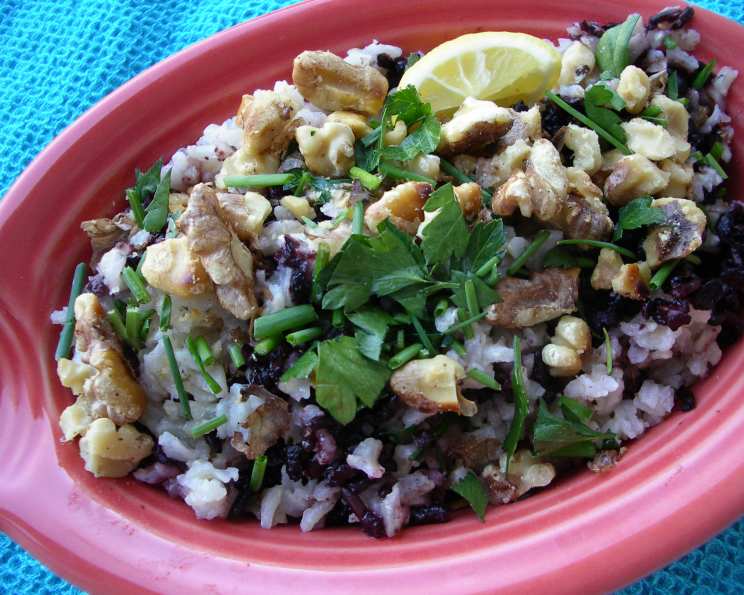
Wild Rice and Walnut Pilaf: A Symphony of Textures and Flavors
As a chef, I’ve always been drawn to dishes that tell a story, that evoke a sense of comfort and earthy goodness. This wild rice and walnut pilaf is one such treasure. I first encountered a version of this humble yet elegant dish on a crisp autumn evening years ago, served alongside roasted duck at a small, family-run restaurant nestled in the woods. The nutty depth of the wild rice, the satisfying crunch of toasted walnuts, and the bright herbaceous notes of parsley and chives created a culinary moment that stayed with me, a reminder that simplicity, when executed with care, can be profoundly satisfying. It’s the kind of side dish that elevates any meal, transforming the ordinary into something truly special.
Recipe Overview
- Prep Time: 10 minutes
- Cook Time: 40 minutes
- Total Time: 50 minutes
- Servings: 4
- Yield: 4 cups
- Dietary Type: Vegetarian, Gluten-Free
Ingredients
Here’s what you’ll need to create this delightful pilaf:
- 1 teaspoon butter
- 1/4 cup finely chopped onion
- 2 1/2 cups water
- 3/4 cup long-grain brown and wild rice mix (such as Lundberg’s)
- 1/2 teaspoon salt, divided
- 2 tablespoons chopped fresh parsley
- 1 tablespoon chopped fresh chives
- 1 tablespoon fresh lemon juice
- 1 teaspoon olive oil
- 2 tablespoons chopped walnuts, toasted
Equipment Needed
- Medium saucepan with a tight-fitting lid
- Measuring cups and spoons
- Knife and cutting board
Instructions
Follow these steps for a perfect Wild Rice and Walnut Pilaf:
- Begin by melting the butter in a medium saucepan over medium heat.
- Once the butter has melted and is shimmering, add the finely chopped onion. Cook the onion for 3 minutes, stirring frequently. You want the onion to soften and become translucent, releasing its aromatic sweetness, but not to brown.
- Stir in the water, the long-grain brown and wild rice mix, and 1/4 teaspoon of salt.
- Bring the mixture to a boil.
- Once boiling, reduce the heat to low, cover the saucepan tightly with its lid, and simmer for 40 minutes. The goal here is to allow the rice to cook gently and absorb all the liquid. Resist the urge to lift the lid during this time, as it will allow steam to escape, affecting the cooking process.
- After 40 minutes, or when the liquid has been completely absorbed by the rice, remove the saucepan from the heat.
- Stir in the remaining 1/4 teaspoon of salt, the chopped fresh parsley, the chopped fresh chives, the fresh lemon juice, and the olive oil. The lemon juice will add a lovely brightness, while the herbs and olive oil will contribute to the overall freshness and richness.
- Gently fluff the pilaf with a fork to distribute the ingredients evenly.
- To serve, sprinkle each portion generously with the toasted walnuts. The toasting of the walnuts is crucial; it brings out their deep, earthy flavor and adds a delightful crunch.
Expert Tips & Tricks
- Toasting the Walnuts: For the best flavor and texture, toast your walnuts before chopping. Spread them in a single layer on a dry skillet over medium-low heat, stirring occasionally, until fragrant and lightly browned. This takes about 5-7 minutes. Alternatively, you can toast them in a 350°F (175°C) oven for about 8-10 minutes. Be watchful, as they can burn quickly.
- Rice Water Ratio: The 2 1/2 cups of water to 3/4 cup of rice mix is a standard ratio, but wild rice can sometimes be a bit more forgiving and might benefit from a touch more liquid if you find it too firm. However, sticking to the given measurement is usually perfect.
- Herb Power: Fresh herbs are paramount here. If you can’t find fresh chives, the parsley alone will still be delicious, but the combination offers a more complex herbaceous profile.
- Onion Sweetness: Sautéing the onion gently is key. Overcooking or burning it will impart a bitter note. You’re aiming for sweet and tender.
- Lid Tightness: Ensure your saucepan lid is snug. A good seal traps the steam effectively, ensuring the rice cooks evenly and remains tender. If your lid isn’t very tight, you can place a piece of aluminum foil over the pot before adding the lid.
Serving & Storage Suggestions
This Wild Rice and Walnut Pilaf is wonderfully versatile. Serve it warm as a sophisticated side dish alongside roasted chicken, grilled fish, or pan-seared pork chops. It also makes an excellent accompaniment to vegetarian mains like stuffed bell peppers or lentil loaves.
For storage, allow the pilaf to cool completely before transferring it to an airtight container. It will keep well in the refrigerator for 3 to 4 days.
To reheat, you can gently warm it in a saucepan over low heat, adding a tablespoon or two of water or broth to prevent it from drying out. Alternatively, microwave individual portions until heated through.
Nutritional Information
| Nutrient | Amount per Serving | % Daily Value |
|---|---|---|
| Calories | 150 kcal | 8% |
| Total Fat | 4.5 g | 6% |
| Saturated Fat | 1 g | 4% |
| Cholesterol | 2.5 mg | 0% |
| Sodium | 301.9 mg | 12% |
| Total Carbohydrate | 26 g | 9% |
| Dietary Fiber | 3.5 g | 12% |
| Sugars | 1.6 g | 2% |
| Protein | 3.8 g | 7% |
(Note: Nutritional information is an estimate and can vary based on specific ingredient brands and portion sizes.)
Variations & Substitutions
- Nutty Alternatives: Pecans or almonds can be substituted for walnuts, though the flavor profile will shift slightly.
- Herb Garden: Feel free to add other complementary herbs like fresh thyme or rosemary, finely chopped, to the pilaf along with the parsley and chives.
- Aromatic Boost: For an extra layer of flavor, you can sauté a clove or two of minced garlic along with the onion in step 2.
- Vegetable Inclusion: Finely diced celery or bell pepper can be added with the onion for added texture and nutrients. Sauté them until tender before adding the rice.
- Broth Base: While water works beautifully, you can elevate the flavor by using vegetable or chicken broth instead of water. Adjust salt accordingly, as broths often contain sodium.
FAQs
Q: Can I use a different type of rice?
A: While this recipe is designed for a brown and wild rice mix, you could experiment with other long-grain rice varieties. However, cooking times and liquid ratios may need to be adjusted.
Q: My pilaf seems a bit dry. What did I do wrong?
A: This can happen if the lid wasn’t sealed tightly, or if the cooking time was slightly too long. Ensure the lid is snug and try adding a tablespoon or two of water or broth when reheating.
Q: Is it important to toast the walnuts?
A: Toasting the walnuts significantly enhances their flavor and adds a pleasant crunch. While you can use them raw, the pilaf will be less complex and satisfying.
Q: How finely should I chop the onion?
A: Aim for a fine chop, about 1/8 inch in size. This ensures the onion integrates smoothly into the pilaf without being overpowering.
Q: Can I make this dish ahead of time?
A: Yes, this pilaf can be made ahead and reheated beautifully. It’s an excellent option for meal prepping.
Final Thoughts
This Wild Rice and Walnut Pilaf is more than just a recipe; it’s an invitation to slow down and savor the simple pleasures of good food. It’s a testament to how a few high-quality ingredients, treated with care, can create something truly memorable. Whether you’re a seasoned cook or just beginning your culinary journey, I encourage you to try this dish. It’s adaptable, forgiving, and consistently delicious. Serve it with your favorite protein, or let it shine as a vegetarian centerpiece. I’d love to hear about your experience and any delightful twists you might add. Happy cooking!