
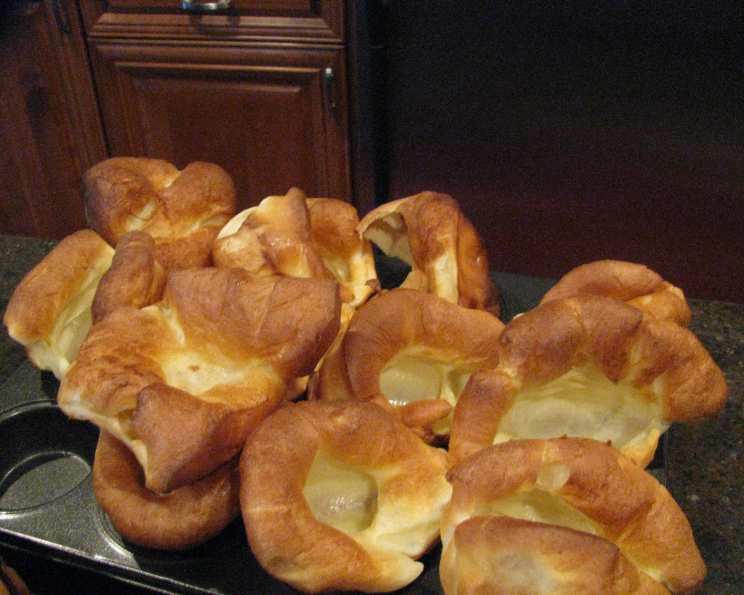
The Glorious Rise of Yorkshire Pudding: More Than Just a Side Dish
I remember the first time I truly understood the magic of Yorkshire pudding. It wasn’t just the towering, golden-brown domes that graced my grandmother’s Sunday roast; it was the sheer joy they brought to the table. My grandmother, a woman who could coax flavor from a pebble, would meticulously prepare these beauties. The aroma that filled her kitchen – a nutty, toasty scent mixed with the richness of the beef drippings – is a memory etched into my very being. For me, Yorkshire pudding isn’t just a recipe; it’s a culinary hug, a testament to simple ingredients transforming into something extraordinary. It’s the crisp exterior giving way to a tender, slightly custardy interior, a textural symphony that perfectly complements any savory dish.
Recipe Overview
- Prep Time: 15 minutes
- Cook Time: 20 minutes
- Total Time: 35 minutes
- Servings: 12
- Yield: 12 Yorkshire puddings
- Dietary Type: Vegetarian
Ingredients
- 4 large eggs
- 1 cup milk (2% or whole milk is recommended for optimal richness)
- 1 cup all-purpose flour
- Salt (to taste, a good pinch is usually sufficient)
Equipment Needed
- Electric mixer
- Glass measuring bowl
- Whisk
- Muffin pan (stoneware works best, but any good quality muffin tin will suffice)
- Oven
Instructions
- In a glass measuring bowl, begin by whisking together the 4 large eggs and 1 cup of milk.
- Heat this egg and milk mixture in your microwave until it is lukewarm. This step helps to activate the gluten in the flour and promotes a better rise. Be careful not to overheat it; lukewarm is the key.
- Sift in a generous pinch of salt and 1 cup of all-purpose flour into the lukewarm egg and milk mixture.
- Beat the batter thoroughly with an electric mixer until it is smooth and well combined. Ensure there are no lumps of flour remaining.
- Once the batter is smooth, let it stand on the counter for 30 minutes. This resting period allows the gluten to relax, which is crucial for achieving light and airy puddings.
- While the batter is resting, oil your muffin pan. Ensure each cup is well-greased to prevent sticking.
- Preheat your oven to 500 degrees Fahrenheit (260 degrees Celsius). This high initial temperature is vital for the dramatic puff of the Yorkshire puddings.
- Place the oiled muffin pan into the preheated 500-degree oven and heat it for 10 minutes. This will ensure the pan is screaming hot, another critical factor for achieving a good rise.
- Carefully remove the hot muffin pan from the oven. Quickly beat the rested batter one more time to ensure it’s well-emulsified.
- Quickly fill each cup of the hot muffin pan only 1/2 way with the batter. It’s important not to overfill, as this will inhibit their rise.
- Bake at 500 degrees Fahrenheit (260 degrees Celsius) for 10 minutes.
- After 10 minutes, drop the oven temperature to 400 degrees Fahrenheit (200 degrees Celsius) and continue to bake for another 10 minutes.
- DO NOT OPEN THE OVEN DOOR DURING BAKING TIME! This is the cardinal rule of Yorkshire pudding making. Opening the door can cause the temperature to drop too rapidly, resulting in sad, deflated puddings.
- Once baked, remove from the oven. These are designed to be huge popovers!
Expert Tips & Tricks
The secret to perfect Yorkshire puddings lies in the heat – both of the batter and the pan. Ensure your milk and egg mixture is lukewarm before adding the flour. Then, that screaming hot muffin pan is non-negotiable. Think of it as giving the batter a sudden jolt of heat to initiate that spectacular rise. Don’t be afraid of the high initial oven temperature; it’s what transforms the liquid batter into those iconic, puffy shapes. For an even more traditional and flavorful pudding, consider using some of the rendered beef fat from your roast instead of oil for greasing the muffin tin.
Serving & Storage Suggestions
Yorkshire puddings are best served immediately, piping hot from the oven, where their crispness is at its peak. They are the quintessential accompaniment to a hearty Sunday roast beef, soaking up delicious gravy like a dream. You can also serve them alongside other roasted meats or even hearty stews. If you happen to have any leftovers (which is rare in my house!), they can be stored in an airtight container at room temperature for up to 1 day. To reheat, place them in a hot oven (around 350°F / 175°C) for a few minutes until they are crisp again. They do not freeze well, as their delicate structure tends to collapse.
Nutritional Information
| Nutrient | Amount per Serving | % Daily Value |
|---|---|---|
| Calories | 75.4 kcal | |
| Calories from Fat | ||
| Total Fat | 2.5 g | 3% |
| Saturated Fat | 1 g | 5% |
| Cholesterol | 73.3 mg | 24% |
| Sodium | 33.5 mg | 1% |
| Total Carbohydrate | 9 g | 3% |
| Dietary Fiber | 0.3 g | 1% |
| Sugars | 0.2 g | 0% |
| Protein | 3.8 g | 7% |
(Note: Nutritional values are estimates and can vary based on ingredients used.)
Variations & Substitutions
While this recipe is a classic for a reason, you can certainly play with it. For a richer flavor, try using whole milk. If you’re looking for a dairy-free option, unsweetened almond milk or soy milk can be used, though the texture might be slightly different. Some adventurous cooks even add a touch of nutmeg to the batter for a subtle warmth.
FAQs
Q: Why are my Yorkshire puddings flat and dense?
A: This is most often due to the oven not being hot enough, the pan not being hot enough, or opening the oven door too early. Ensure you follow the high-temperature instructions carefully.
Q: Can I make the batter ahead of time?
A: Yes, you can make the batter and let it rest in the refrigerator for up to 24 hours. Bring it to room temperature before proceeding with the recipe.
Q: My Yorkshire puddings stick to the pan. What am I doing wrong?
A: Make sure your muffin tin is well-greased. For extra insurance, use a good quality non-stick pan or even consider using a bit of duck fat or lard for greasing.
Q: Can I use a different type of flour?
A: All-purpose flour is ideal for its gluten content, which contributes to the rise. While other flours might work, they could alter the texture and rise of the pudding.
Q: What is the best way to ensure a good rise?
A: A combination of a hot oven, a hot pan, and a properly rested batter is key to achieving that magnificent puff.
Final Thoughts
There you have it – the path to truly magnificent Yorkshire puddings. These aren’t just a side dish; they are an experience. A testament to how simple ingredients, treated with respect and a little bit of heat, can create something truly spectacular. So, gather your ingredients, fire up that oven, and prepare to be amazed. They are the perfect canvas for a rich gravy, a dollop of horseradish, or simply enjoyed on their own, a golden testament to the simple pleasures of good food.