
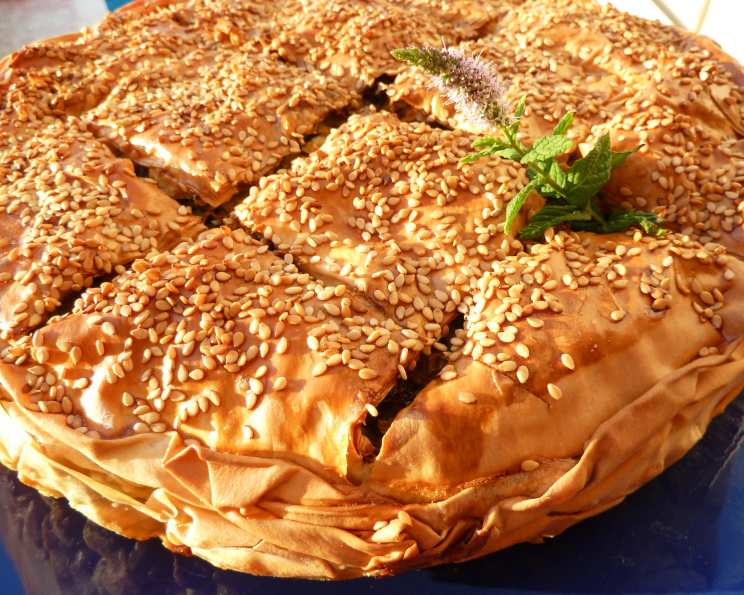
Zucchini Pie of Chania – Kolokithoboureko Chaniotico: A Taste of Cretan Sunshine
There are some dishes that transport you instantly, back to a sun-drenched village square or a bustling taverna by the sea. For me, Kolokithoboureko Chaniotico is one of those dishes. I remember the first time I encountered it, not in Chania itself, but in a small, family-run restaurant on a side street in Athens. The aroma, a delicate dance of fresh herbs, savory vegetables, and the subtle warmth of baked phyllo, filled the air. When it arrived, a golden, rustic pie, its simplicity belied a depth of flavor that was utterly captivating. It was a revelation – a testament to the Cretan genius for transforming humble ingredients into something truly extraordinary.
Recipe Overview
- Prep Time: Approximately 30 minutes
- Cook Time: 1 hour 30 minutes
- Total Time: 2 hours
- Servings: 4-6
- Yield: 1 pie
- Dietary Type: Vegetarian (can be made vegan with substitutions)
Ingredients
This recipe celebrates fresh, seasonal ingredients, and its beauty lies in its adaptability. Don’t hesitate to adjust the proportions to your liking or to what’s readily available.
-
For the Crust and Assembly:
- 250 grams phyllo pastry (or 1 large and 1 smaller un-sweetened pie crust, size dependent on your mold)
- Olive oil, for greasing and drizzling
- 1-2 tablespoons sesame seeds
- 1 tablespoon egg, slightly beaten (reserved from the filling)
-
For the Filling:
- 250 grams potatoes, peeled and thinly sliced (or coarsely grated)
- 500 grams zucchini, small, thinly sliced (or coarsely grated)
- 400 grams fresh white cheese (authentic Greek anthiro or myzithra is ideal, or 400g ricotta cheese), sliced or crumbled
- 1 egg, slightly beaten
- Salt, to taste
- Pepper, to taste
- 15 leaves mint, chopped (adjust to your preference)
Equipment Needed
- Oven
- Round cake mold or pie dish (approximately 10 inches in diameter)
- Large bowl(s)
- Knife or mandoline slicer
- Grater (if grating vegetables)
- Spatula or pastry brush
Instructions
The magic of Kolokithoboureko lies in its slow, gentle cooking, allowing the flavors to meld beautifully. While it requires a bit of time, the process itself is straightforward and incredibly rewarding.
- Prepare your ingredients: Begin by getting all your components ready. Peel and slice the potatoes thinly. Wash and thinly slice or coarsely grate the zucchini. Crumble or slice the white cheese. Chop the fresh mint. Lightly beat one egg, reserving about a tablespoon for the topping.
- Preheat the oven: Set your oven to a moderate 320°F (150°C). This lower temperature is key to ensuring the pie cooks through without the phyllo burning.
- Prepare the mold: Generously grease your chosen mold with olive oil. This will help prevent the phyllo from sticking and will contribute to a lovely golden crust.
- Line the mold with phyllo: Take about two-thirds of your phyllo pastry sheets. Carefully lay them into the prepared mold, allowing the edges to overlap and extend slightly beyond the rim of the mold. This creates a rustic border that will be folded over later.
- Layer the filling – potatoes: Begin by arranging the sliced potatoes evenly over the phyllo base.
- Add the first layer of zucchini: Scatter half of the sliced or grated zucchini over the potatoes.
- Season and add cheese/mint: Sprinkle generously with salt and pepper to taste. Then, add half of the white cheese and half of the chopped mint leaves.
- Add the second layer of zucchini: Distribute the remaining zucchini over the cheese and mint.
- Season again and add remaining cheese/mint: Season this layer with salt and pepper once more. Follow with the rest of the white cheese and mint leaves.
- Drizzle with olive oil: Drizzle about 2 tablespoons of olive oil over the entire filling. This will add richness and help the ingredients cook evenly.
- Incorporate the egg: Pour the beaten egg (remembering to reserve a tablespoon for later) over the filling. Distribute it as evenly as possible.
- Fold the phyllo borders: Carefully fold the overhanging edges of the phyllo pastry inward, covering the edges of the filling. This creates a beautiful, sealed edge for your pie.
- Apply egg wash and top layer: Lightly brush the folded phyllo edges with a little of the reserved beaten egg. Then, cover the entire pie with the remaining 2 sheets of phyllo pastry.
- Final egg wash and scoring: Brush the top layer of phyllo generously with the remaining tablespoon of beaten egg. Using a sharp knife, carefully make incisions on the surface in a square pattern. This is not only decorative but also allows steam to escape during baking.
- Add sesame seeds and oil: Sprinkle the sesame seeds evenly over the top. Drizzle with about 1 tablespoon of olive oil.
- Bake: Place the pie in the preheated oven at 320°F (150°C) and bake for 1 hour and 30 minutes.
- Golden brown finish: In the last 10 minutes of baking, if the pie isn’t as golden brown as you’d like, you can increase the oven temperature slightly until it achieves a beautiful, rich golden hue. Keep a close eye to prevent burning.
- Rest and serve: Once baked, remove the pie from the oven and let it rest for a few minutes. Serve warm or lukewarm.
Expert Tips & Tricks
- Managing Zucchini Moisture: If your zucchini tends to be watery, especially larger specimens, a simple trick is to slice or grate them, place them in a bowl, and toss with 1-2 teaspoons of salt. Let them sit for about 30 minutes. Rinse them thoroughly under cold water and drain very well before using. This draws out excess moisture, preventing a soggy pie.
- Phyllo Handling: Phyllo can be delicate. Keep the sheets you’re not immediately using covered with a damp (not wet) kitchen towel to prevent them from drying out and cracking.
- Crust Alternative: If you’re short on time or prefer a less fussy crust, using store-bought unsweetened pie crusts (as mentioned in the ingredients) is a perfectly acceptable and delicious alternative. You might need to adjust the size to fit your mold.
- Cheese Variations: While anthiro or myzithra are traditional and offer a wonderful tang, feel free to experiment. Feta cheese (crumbled) can add a delightful saltiness, or a mix of ricotta and a little parmesan can also work beautifully.
- Herbal Notes: Mint is classic, but you could also try a mix of mint and dill, or even a hint of oregano for a different aromatic profile.
Serving & Storage Suggestions
Kolokithoboureko Chaniotico is wonderfully versatile and shines at various temperatures.
- Serving: It’s best enjoyed warm or lukewarm. It makes a fantastic light lunch, a delightful starter, or a substantial side dish to grilled meats or fish. A simple green salad with a lemon-olive oil dressing is a perfect accompaniment.
- Storage: Leftovers can be stored, covered, at room temperature for a few hours if your environment is cool. For longer storage, refrigerate the pie in an airtight container for up to 3 days.
- Reheating: To reheat, gently warm the pie in a moderate oven (around 300°F/150°C) for about 15-20 minutes, or until heated through and the crust is re-crisped. You can also reheat individual slices in a toaster oven or even carefully in a skillet on low heat with a lid.
Nutritional Information
Please note that nutritional values are estimates and can vary based on specific ingredients and quantities used.
| Nutrient | Amount per Serving (approx.) | % Daily Value (approx.) |
|---|---|---|
| Calories | 287 kcal | 14% |
| Total Fat | 6.5 g | 10% |
| Saturated Fat | 1.6 g | 7% |
| Cholesterol | 46.5 mg | 15% |
| Sodium | 333.6 mg | 13% |
| Total Carbohydrate | 48.3 g | 16% |
| Dietary Fiber | 4.1 g | 16% |
| Sugars | 3.8 g | 15% |
| Protein | 9.2 g | 18% |
Variations & Substitutions
- Vegan Kolokithoboureko: To make this dish vegan, omit the egg entirely. You can bind the filling by increasing the cheese slightly (using a vegan ricotta or cashew-based cheese) or by adding a tablespoon of cornstarch or arrowroot powder to the filling mixture. Ensure your phyllo pastry is vegan (most are, but it’s always good to check).
- Heartier Version: For a more substantial pie, you could add a layer of cooked, finely chopped leeks or onions sautéed with the zucchini.
- Spicy Kick: A pinch of red pepper flakes added to the filling can introduce a subtle warmth.
FAQs
Q: My zucchini seems very watery. What should I do?
A: Grate or slice the zucchini, toss it with 1-2 teaspoons of salt in a bowl, let it sit for 30 minutes, then rinse and drain thoroughly before using.
Q: Can I make this pie ahead of time?
A: Yes, this pie can be assembled a few hours in advance and baked just before serving, or baked completely and gently reheated later.
Q: What kind of cheese is best for this pie?
A: Traditionally, Greek anthiro or myzithra is used. Ricotta is a good readily available substitute. Feta can also be used for a saltier flavor.
Q: How do I know when the pie is done?
A: The pie is ready when the top is golden brown and the filling is set. You can insert a knife into the center to check if it comes out clean.
Q: Can I freeze this zucchini pie?
A: It’s generally best enjoyed fresh or reheated after refrigeration. Freezing may affect the texture of the phyllo pastry.
Final Thoughts
Kolokithoboureko Chaniotico is more than just a recipe; it’s an invitation to slow down, savor simple flavors, and connect with the culinary heart of Crete. The gentle baking process and the combination of fresh zucchini, creamy cheese, aromatic mint, and golden phyllo create a dish that is both comforting and elegant. I encourage you to try this taste of the Mediterranean, to fill your kitchen with its wonderful aroma, and to share its deliciousness with loved ones. It’s a dish that truly embodies the spirit of Greek hospitality – generous, flavorful, and always welcome.