
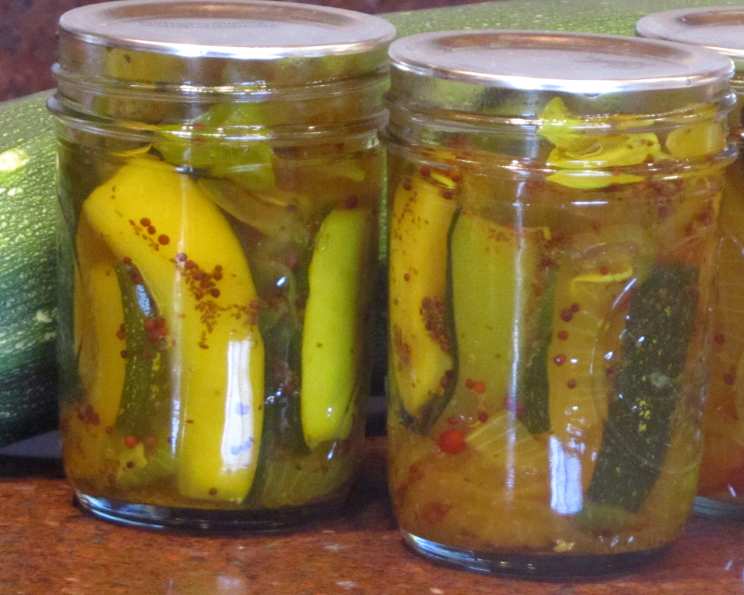
Zesty Zucchini Spears: A Taste of Summer’s Bounty, Brined and Bold
There’s a particular magic that happens when garden zucchini truly hits its stride – a prolific abundance that can feel overwhelming if you’re not prepared. This year, my garden was bursting, and after a week of zoodles and grilled rounds, I found myself with a surplus. It was during one of those moments of culinary inspiration, a desire to preserve that vibrant summer flavor and add a zesty kick to our pantry, that these Zucchini Spears were born. The aroma of simmering vinegar, sweet sugar, and pungent garlic filled my kitchen, a promise of tangy, spicy delights to come, a true testament to the transformative power of simple preservation.
Recipe Overview
- Prep Time: 3-4 hours (brining/infusing, not included in active prep)
- Cook Time: 15 minutes (processing)
- Total Time: 3 hours 15 minutes – 4 hours 15 minutes (includes brining/infusing and processing)
- Servings: 40
- Yield: 8 1/2 pints
- Dietary Type: Vegan, Dairy-Free, Gluten-Free
Ingredients
This recipe is a symphony of sweet, sour, and spicy, designed to create a delightful pickled condiment.
- 3 lbs zucchini, seeds removed, sliced into spears
- 10-12 fresh pepperoncini peppers (score but left whole)
- 2 serrano peppers (stem removed and sliced)
- 1 large red onion (peeled, halved, and sliced)
- Pickling salt (for brining)
- 4-8 garlic cloves, sliced very thin
- 3 cups vinegar (a good quality white vinegar or apple cider vinegar works well)
- 2 cups sugar
- 2 teaspoons celery seeds
- 2 teaspoons mustard seeds
- 1 teaspoon turmeric
- 1 teaspoon red peppercorns
- Ball pickle crisp, granules (optional, for added crunch: 1/8 teaspoon per pint jar or a dash of 1/16 teaspoon per half-pint jar)
Equipment Needed
- Large stainless steel bowl
- Colander
- Large stainless steel pot
- 8 1/2 pint jars (or equivalent capacity of half-pint jars)
- Water bath canner or a large pot deep enough to cover jars by at least 1 inch of water
- Jar lifter
- Ladle
- Funnel (optional, for filling jars)
- Clean towels
- Small bowl or ramekin (for pickle crisp)
Instructions
The process is straightforward, with the magic happening in the brining and infusion stages.
- In a large stainless steel bowl, begin by layering the zucchini spears, fresh pepperoncini peppers, sliced serrano peppers, and sliced red onion.
- Sprinkle 1/2 cup of pickling salt evenly over the vegetables.
- Top the salted vegetables with cold water to fully submerge them.
- Set aside the bowl and allow the vegetables to brine and infuse for 2 to 3 hours. This step is crucial for drawing out excess moisture and beginning the tenderizing process.
- After the brining period, drain the vegetables thoroughly in a colander.
- Rinse the vegetables very well under running cold water to remove any residual salt.
- Drain the vegetables extremely well to ensure no excess water remains.
- In a large stainless steel pot, combine the vinegar, sugar, celery seeds, mustard seeds, turmeric, and red peppercorns.
- Bring this mixture to a boil over medium-high heat, stirring constantly until the sugar dissolves completely.
- Once the sugar is dissolved, gently boil the mixture for 10 minutes to allow the spices to bloom and the syrup to thicken slightly.
- Carefully add the drained vegetables to the hot syrup.
- Cover the pot and let the vegetables infuse in the hot liquid for 1 hour, off the heat. This allows the flavors to meld and penetrate the vegetables.
- While the vegetables are infusing, prepare your jars for canning. Wash them thoroughly with hot, soapy water and rinse well. Keep them warm to prevent thermal shock. If water bath canning, prepare your water bath canner by filling it with water and bringing it to a simmer.
- After the infusion period, return the pot with the vegetables and liquid to the stove.
- Bring the vegetables back to a boil to heat them through, ensuring they are hot before packing.
- Pack the hot zucchini spears, peppers, and onions into your sterilized jars. Distribute them evenly.
- If using, top each jar with a dash of the pickle crisp granules. For pint jars, use about 1/8 teaspoon per jar; for half-pint jars, use about 1/16 teaspoon per jar.
- Remove any air bubbles trapped in the jars by gently tapping the sides of the jars or using a non-metallic utensil.
- Ladle the hot pickling liquid into the jars, leaving 1/2 inch of headspace at the top.
- Wipe the rims of the jars clean with a damp cloth to ensure a good seal.
- Top each jar with its respective lid and band. Screw the bands on fingertip tight – not too tight, as air needs to escape during processing.
- Carefully place the sealed jars into the boiling water bath canner, ensuring they are covered by at least 1 inch of water.
- Bring the water bath back to a rolling boil.
- Once boiling, cover the canner and boil for 15 minutes (adjusting for altitude if necessary, though for 15 minutes, significant adjustments are usually not required unless you are at very high altitudes).
- After 15 minutes, turn off the heat and remove the lid from the canner.
- Rest the jars in the hot water for 5 minutes before removing them.
- Using a jar lifter, remove the jars from the canner without tipping them.
- Place the jars on a draft-free surface (like a folded kitchen towel on your counter) and allow them to cool completely until they reach room temperature. You should hear a “ping” as the lids seal.
- After 12 hours, check that the lids have sealed (they should be concave and not flex when pressed). Remove the bands, wipe the jars clean, label them, and store in a cool, dark place.
Expert Tips & Tricks
- Uniformity is Key: When slicing your zucchini spears, aim for consistent thickness. This ensures they pickle evenly and maintain a pleasant texture.
- Seed Removal Matters: Don’t skip the step of removing the seeds from your zucchini. The seeds can become bitter and make the spears mushy.
- Vinegar Choice: While white vinegar is standard for pickling, a good quality apple cider vinegar can add a subtle fruity note.
- Spice Level: If you prefer a milder heat, you can reduce the number of serrano peppers or remove the seeds and membranes from them before slicing. Conversely, for more heat, leave the seeds in or add an extra serrano.
- Infusion Time: The 1-hour infusion off heat is where the real flavor development happens. Resist the urge to rush this step.
- Water Bath Canning: Ensure your jars are fully submerged in the boiling water. If your pot isn’t deep enough, you can use a stockpot and be sure to maintain the water level as it boils off.
- Headspace: The 1/2 inch headspace is critical for proper sealing. Too much headspace can lead to a poor seal, while too little can cause the liquid to siphon out during processing.
Serving & Storage Suggestions
These Zesty Zucchini Spears are incredibly versatile. They are fantastic served cold as a tangy appetizer alongside charcuterie boards, cheese plates, or as a palate cleanser between courses. They also add a vibrant pop of flavor and a welcome crunch to sandwiches, wraps, and burgers. Chop them finely and mix into potato salad or pasta salad for an extra zing.
Storage: Properly canned and sealed jars can be stored in a cool, dark place for up to a year. Once opened, they must be refrigerated and will last for about 3-4 weeks. Ensure you always use a clean utensil when serving to avoid introducing bacteria. If you notice any signs of spoilage, such as mold, off-odors, or a cloudy brine, discard the entire jar.
Nutritional Information
Here is an approximate nutritional breakdown per serving, assuming a serving is a portion of one of the 8 1/2 pints.
| Nutrient | Amount per Serving (approximate) | % Daily Value |
|---|---|---|
| Calories | 55 kcal | 3% |
| Total Fat | 0.2 g | 0% |
| Saturated Fat | 0 g | 0% |
| Cholesterol | 0 mg | 0% |
| Sodium | 218 mg | 9% |
| Total Carbohydrate | 12.6 g | 4% |
| Dietary Fiber | 0.7 g | 2% |
| Sugars | 11.6 g | 46% |
| Protein | 0.7 g | 1% |
Note: These are estimated values and can vary based on specific ingredients and quantities used.
Variations & Substitutions
- Heat Control: For a milder flavor, use only the pepperoncini peppers and omit the serranos. For a spicier kick, add a few jalapeño peppers or even a habanero (with caution!).
- Onion Variety: While red onion provides a beautiful color, yellow or sweet onions can also be used.
- Vinegar Blend: Experiment with using half white vinegar and half apple cider vinegar for a more complex flavor profile.
- Aromatic Additions: Consider adding a few sprigs of fresh dill or a bay leaf to the brine for an extra layer of aroma and flavor.
- Sweetness Adjustment: If you prefer a less sweet pickle, you can slightly reduce the amount of sugar, but be aware this might affect the preservation process.
FAQs
Q: Can I use regular table salt instead of pickling salt?
A: It’s best to use pickling salt or kosher salt without any anti-caking agents. Table salt can contain additives that can make your brine cloudy and affect the final product.
Q: Why do my pickled zucchini spears turn out mushy?
A: Mushy pickles are often a result of not draining the zucchini well after brining, using old vegetables, or not processing them long enough in the water bath. Ensuring proper brining, draining, and processing is key to a crisp texture.
Q: How do I know if my jars have sealed properly?
A: A properly sealed lid will be concave (curved downwards) and will not flex when pressed in the center. If a lid does not seal, refrigerate the jar and consume the contents within a few weeks.
Q: Can I skip the water bath canning step?
A: While you can refrigerate these pickles without water bath canning, they will not have the same shelf stability. For long-term storage at room temperature, water bath canning is essential.
Q: How long does the pickling liquid last?
A: The pickling liquid itself, if strained and stored in the refrigerator, can be reused a couple of times for subsequent batches of pickles, but it’s best to make a fresh batch of brine for optimal flavor and safety.
Final Thoughts
These Zesty Zucchini Spears are more than just a pickled vegetable; they are a vibrant reminder of summer’s generosity, a delicious way to extend the season’s bounty. They bring a bright, tangy crunch to any meal and are a testament to the simple pleasure of preserving fresh ingredients. I encourage you to try this recipe, especially when your garden is overflowing. Share your creations, your feedback, and perhaps even your own delightful variations. Happy pickling, and enjoy the zesty zest of your harvest!